- Home
- Machine
- Media
- Application
- Service
- About Us
- Blogs
- Contact Us
- All
- Product Name
- Product Keyword
- Product Model
- Product Summary
- Product Description
- Multi Field Search


Views: 0 Author: Site Editor Publish Time: 2026-07-29 Origin: Site
High-energy mass finishing relies on extreme G-forces to slash cycle times from hours to minutes. This raw mechanical power accelerates surface refinement, but it also amplifies the risk of severe part damage if load dynamics are incorrect. Improper media-to-part ratios lead to costly consequences like part-on-part impingement, uneven edge rounding, surface pitting, and entirely wasted production cycles. Operators must calculate precise volumetric ratios based on part geometry, media density, and machine kinematics. Mastering these calculations ensures repeatable, uniform surface refinement every single cycle, protecting delicate geometries while maximizing throughput. The margin for error shrinks drastically when processing components at 30 times the force of gravity. A slight miscalculation in the abrasive buffer means the difference between a mirror-finish medical implant and a scrapped batch of expensive titanium parts. We will break down exactly how to establish, verify, and scale the correct volumetric ratios for your specific finishing operations.
Achieving an even finish requires strict control over the kinetic energy transferred to the workpieces. Success in high-energy environments means uniform Ra reduction, consistent edge radiusing, and the complete absence of contact marks. You must control how abrasive elements interact with metal surfaces under extreme pressure. A Centrifugal Polishing Machine generates forces ranging from 10x to 30x gravity. This intense gravitational load compresses the media mass against the barrel walls. The compression fundamentally changes how media flows across part surfaces compared to standard vibratory finishing.
Vibratory kinetics operate differently. A standard vibratory tumbler keeps the mass in a loose, fluid state. This allows operators to run lower volume ratios, typically between 2:1 and 4:1. However, centrifugal kinetics create a compacted, highly pressurized slide. The entire mass moves as a cohesive unit before cascading down the slope of the barrel. Lower vibratory ratios fail completely in high-energy processes. The intense pressure forces parts together if the abrasive buffer is too thin, causing immediate impingement.
The primary function of the media ratio is strict part isolation. It creates a physical barrier that prevents components from colliding. At the same time, it maintains sufficient pressure for effective surface abrasion. If the ratio drops, the buffer thins out. Parts migrate through the mass and strike each other. If the ratio is too high, parts remain isolated but lack the necessary friction against the abrasive elements to achieve rapid surface smoothing. Operators must view the media bed as a dynamic fluid that suspends the parts. When the machine reaches full rotational speed, the centrifugal force packs the media tightly around every contour of the workpiece. This packing effect is what allows for rapid deburring and polishing, but it only works if there is enough media volume to absorb the kinetic energy and prevent metal-to-metal contact.
Understanding the physics of the slide is essential. Inside the barrel, the mass is pushed outward by centrifugal force, forming a tight layer against the polyurethane lining. As the barrel rotates, the top layer of this mass overcomes friction and slides down the chord of the circle. This sliding action is where all the cutting and polishing occurs. If the ratio of media to parts is incorrect, the parts will either sink to the bottom of the slide and crash into the barrel wall, or they will float to the top and crash into each other. Proper volumetric calculation ensures the parts remain suspended within the active sliding layer.
The baseline rule for high-energy finishing dictates a 3:1 to 5:1 volumetric ratio. Volume, not weight, serves as the critical metric for load calculation. Two parts might weigh the same but displace entirely different amounts of space. Calculating the exact volume of the batch ensures the physical mass provides enough spatial buffering. Operators often use water displacement methods to find the true volume of complex parts before calculating the required abrasive load.
Adjusting this baseline becomes necessary when handling fragile or complex geometries. Delicate components, heavy parts, or complex additive manufacturing geometries demand higher ratios. You will often increase the ratio to 5:1 or even 6:1. Metal 3D-printed parts present a special case. They require rapid surface smoothing and geometric refinement without altering close-tolerance features. A higher ratio protects these delicate features from aggressive impact while the fine abrasives smooth the rough printed layers. The trade-off is clear. Higher media ratios increase part protection but reduce the total part yield per cycle.
The mass of the individual parts also dictates the necessary resistance. High-mass parts influence their own movement through the compacted bed. Heavy steel components will push through lighter abrasives rapidly. They require a denser buffer or a higher volumetric ratio to stay isolated. Low-mass aluminum or titanium parts tend to float or move synchronously with the mass, allowing for slightly lower ratios without risking collision.
To accurately determine the required media volume for a new production run, follow these specific steps:
| Part Geometry / Material | Recommended Starting Ratio | Primary Operational Goal |
|---|---|---|
| Solid Steel / Simple Geometry | 3:1 | Maximum throughput, aggressive deburring |
| Aluminum / Moderate Complexity | 4:1 | Balanced surface smoothing and edge radiusing |
| Titanium / 3D Printed Lattices | 5:1 or 6:1 | Strict part isolation, fine surface polishing |
| Heavy Castings / Sharp Edges | 4.5:1 | Preventing deep impingement marks |
Evaluating media densities is a core step in establishing your process. High-density ceramic and steel media behave differently than medium-density ceramic or low-density plastic. Denser media exerts significantly more cutting force. It carries more kinetic energy under high G-forces. This increased force often requires a higher ratio to prevent aggressive localized wear on the parts. Medium-density ceramic serves as a reliable general-purpose starting point for most machined metals.
Physical size and geometry directly affect packing density. Triangles, cones, cylinders, and spheres settle differently inside the barrel. Smaller media packs tighter, reducing the void space between individual pieces. This alters the effective volume ratio. A 4:1 ratio using large angle-cut cylinders provides a different buffering capacity than a 4:1 ratio using fine spherical media. You must account for how the shapes interlock and support the workpieces. If you use a media that is too large, the gaps between the abrasive pieces will allow thin parts to slip through and make contact. If you use media that is too small, it may pack so densely that it restricts the movement of the parts entirely, leading to uneven finishing.
The addition of water and polishing compounds acts as the third element of the ratio. Compounds typically run at a pH of 8 to 10 for metals. They provide essential lubricity and suspend fine metal particulates. This fluid variable directly affects how the mass flows. Too much water causes the mass to slip against the barrel walls, reducing the cutting action. Too little water creates a thick sludge that binds the abrasive, forcing parts together and causing damage. The water level should generally sit just below the top of the media mass when the barrel is stationary. This ensures the compound can properly lubricate the slide without causing the entire mass to hydroplane.
When selecting media, you must also consider the wear rate. Ceramic media fractures and wears down over time. A batch of media that started at a 4:1 ratio might degrade to a 3.5:1 ratio after a week of heavy production. Operators must monitor this degradation and top off the media regularly to maintain the established volumetric ratio. Failure to account for media wear is one of the most common causes of sudden part impingement in otherwise stable processes.
Kinematic differences between machine types change how you calculate loads. A planetary centrifugal finishing machine uses counter-rotating barrels mounted on a high-speed turret. The turret rotates in one direction while the individual barrels rotate in the opposite direction. This specific sliding action controls flow tightly. Because the movement is so highly controlled, planetary systems may allow for tighter ratios, sometimes closer to 3:1, without risking impingement. The counter-rotation creates a smooth, continuous figure-eight folding motion inside the barrel, which keeps parts evenly distributed throughout the media bed.
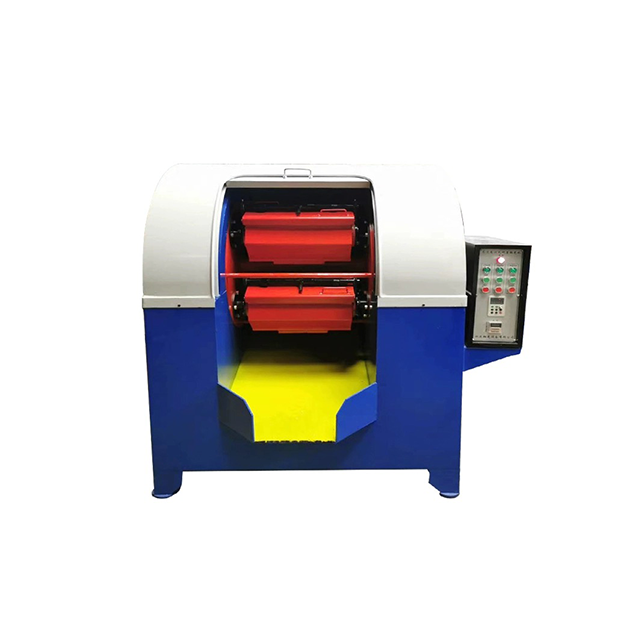
Evaluating a high energy barrel polishing machine requires specific load parameters. You must fill these barrels to the correct total capacity. Operational fill levels typically sit between 50% and 60% full. Filling the barrel to this exact level generates the optimal sliding action. If the barrel is underfilled, the mass drops violently instead of sliding, destroying the parts. If overfilled, the mass locks up and no surface refinement occurs. The geometry of the barrel itself also plays a role. Hexagonal or octagonal barrels create a more aggressive tumbling action than smooth cylindrical barrels, which may require a slight increase in the media ratio to compensate for the added turbulence.
Scalability considerations are vital when moving from lab testing to production. Scaling prototype ratios established in small lab machines to full-scale production equipment requires careful math. A 4:1 ratio in a 10-liter machine behaves differently than a 4:1 ratio in a 100-liter machine due to the increased total mass weight. You must test and verify the finish consistency during the scale-up phase to ensure the larger mass does not crush the components at the bottom of the barrel. The increased hydrostatic pressure in a larger barrel means that parts at the bottom of the slide are subjected to significantly more force than parts in a smaller lab machine. Adjusting the water level and compound concentration can help mitigate this increased pressure during scale-up.
Recognizing the symptoms of under-loading prevents scrapped batches. When the ratio is too low, visual indicators of part-on-part contact appear quickly. You will see nicks, deep scratches, and rolled edges on precision machined surfaces. Mitigation steps require immediate action. Recalculate the volume of your parts. Verify your abrasive wear, as shrinkage over time reduces the actual volume in the barrel. Adjust your batch sizes downward to restore the proper 4:1 or 5:1 buffer.
Symptoms of over-loading manifest as inefficiency rather than damage. Indicators of excessive media include extended cycle times, insufficient deburring, and a complete lack of surface smoothing. The parts remain perfectly safe, but the process fails to achieve the required Ra reduction. The economic impact of over-loading includes wasted electrical energy, consumed compound, and severely reduced daily throughput. If you notice that parts are coming out of the machine looking untouched after a standard cycle, the first step is to check if the media ratio is too high, preventing the parts from reaching the active sliding layer.
Developing a load verification SOP standardizes the process. Operators need a documented method to measure, document, and verify volumetric ratios before every single cycle. This involves using dedicated measuring buckets for both parts and abrasives. Strict quality control at the loading stage eliminates the guesswork that leads to rejected batches. Documenting the exact fill levels and compound ratios ensures any operator can repeat the successful finish.
To build an effective load verification SOP, include these specific checks:
The standard 3:1 to 5:1 volumetric ratio provides a reliable starting point for high-energy mass finishing. However, the optimal ratio remains a highly specific calculation based on exact part geometry, abrasive density, and the specific machine kinematics. You must balance the need for aggressive surface refinement against the absolute requirement for part protection. Your shortlisting logic for selecting the right ratio depends on your primary goal. Aggressive deburring of solid steel parts allows for lower ratios and higher throughput. High-gloss polishing of fragile, 3D-printed titanium components demands higher ratios to guarantee isolation and protect delicate features.
Take these actionable next steps to optimize your finishing operations:
A: The industry standard is a 3:1 to 5:1 volumetric baseline. This ratio ensures proper part isolation under high G-forces, preventing collisions while maintaining enough pressure for effective surface abrasion and uniform edge radiusing.
A: Vibratory systems operate in a loose, fluid state, often using a lower 2:1 to 4:1 ratio. High-energy centrifugal machines create a highly pressurized, compacted mass, requiring ratios of 3:1 to 5:1 or higher to prevent severe part damage under extreme forces.
A: Heavier media like steel or high-density ceramic carries more kinetic energy, altering the impact force. This often requires careful volume calculation or higher ratios to prevent aggressive localized wear. Medium-density ceramic serves as a safer general-purpose starting point.
A: A low ratio thins the protective buffer, leading directly to part-on-part impingement. You will see deep scratches, nicks, rolled edges, surface pitting, and ultimately, entirely rejected production batches due to geometric damage.
A: Use water displacement methods or CAD data to determine the true volume of the complex part. Then, apply a higher ratio, typically 5:1 or 6:1, to protect delicate internal features and thin walls during rapid surface smoothing.
A: Yes. Abrasive attrition constantly reduces the total volume inside the barrel. Operators must measure and top off the media regularly to maintain the correct volumetric ratio and prevent unexpected part-on-part contact.
A: The standard operational fill level is typically 50% to 60% of the total barrel capacity. This specific level allows for proper mass movement, generating an optimal sliding action rather than a destructive dropping motion.