- Home
- Machine
- Media
- Application
- Service
- About Us
- Blogs
- Contact Us
- All
- Product Name
- Product Keyword
- Product Model
- Product Summary
- Product Description
- Multi Field Search


Views: 0 Author: Site Editor Publish Time: 2025-12-25 Origin: Site
Are blockages in your linear vibrating screen machines affecting your efficiency?Linear vibrating screen machines are essential in industries like mining, agriculture, and food processing.However, businesses often worry about whether these machines block easily, causing downtime and inefficiency.In this article, you will learn about the causes of blockages, and how to prevent and address them effectively.
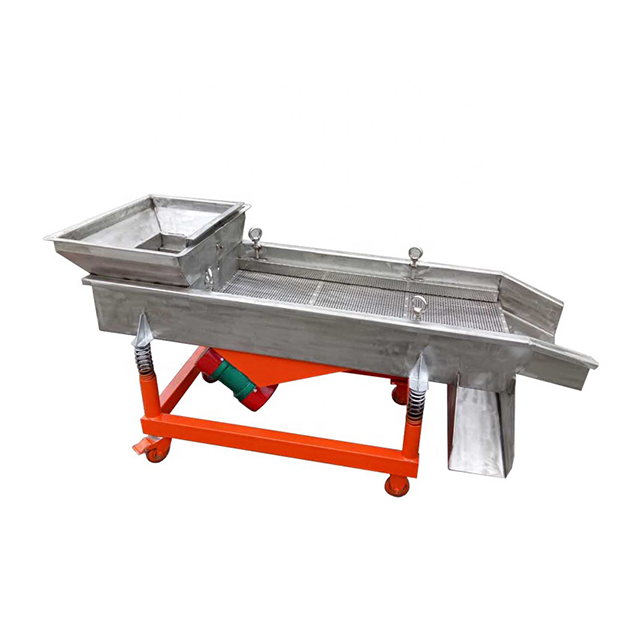
A linear vibrating screen machine is a widely used screening device that employs linear vibration to separate materials based on their size. The machine features a screen mesh through which materials pass, and it is driven by vibrating motors that generate the necessary movement for material separation.
The machine operates by producing a linear motion, which allows the materials to flow smoothly over the screen. It’s an efficient solution for sieving dry, wet, and sticky materials in industries that require separation, such as mining, food processing, and construction.
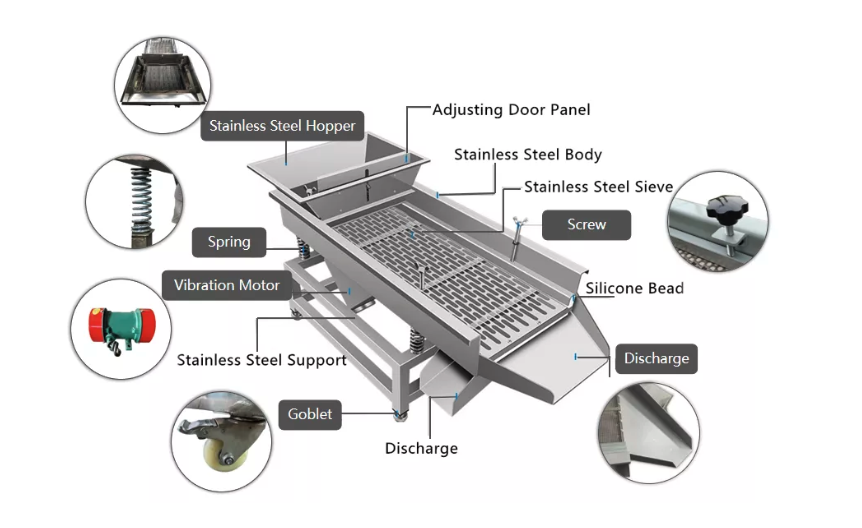
A linear vibrating screen machine is made up of several key components that enable its effective operation. These include:
Component | Description |
Vibrating Motor | The motor generates vibrations to move materials across the screen. |
Screen Mesh | The mesh is used to separate materials by size. Different mesh sizes cater to different types of materials. |
Frame | The frame provides the structure for the machine and supports the screen and motor. |
Springs | Springs absorb the vibrations and help maintain the stability of the machine during operation. |
Feed Hopper | A feed hopper is used to load material onto the screen for separation. |
The vibrating motor is the heart of the machine, and its settings play a crucial role in determining how well the machine performs. Each component works together to ensure that the materials are sorted according to their size efficiently.
The working principle of a linear vibrating screen is based on the linear motion created by the vibrating motor. When the machine is in operation, the motor vibrates at a set frequency and amplitude, creating a linear motion that moves the material across the screen. The particles are filtered through the mesh based on their size, with the larger particles being separated and the smaller ones passing through.
Here’s a quick overview of the process:
Step | Action |
Material Loading | Materials are fed into the machine via the feed hopper. |
Vibration Movement | The vibrating motor generates linear vibration to move the material across the screen. |
Screening Process | The material passes through the screen mesh, and particles are separated. |
Discharge | Separated materials are collected at the discharge points. |
By adjusting the vibration frequency, amplitude, and mesh size, the machine can be optimized to handle different materials and applications.
Although linear vibrating screen machines are designed to operate efficiently, there are several factors that can lead to blockages. Understanding these causes is essential in preventing downtime and improving machine longevity.
One of the most common reasons for blockages is the use of the wrong screen mesh size. If the mesh size is too small for the material being processed, particles can accumulate and clog the screen. In contrast, using a mesh that is too large may result in inefficient screening, as small particles won’t be effectively separated.
To avoid mesh-related blockages, always ensure that the mesh size is suited to the material you are screening.
Material Type | Recommended Mesh Size |
Fine powders | 100 to 200 mesh |
Granules | 10 to 40 mesh |
Coarse particles | 2 to 10 mesh |
Different materials behave differently when processed through a vibrating screen. Materials that are sticky, moist, or have fine particles tend to clog the screen more often. For instance, materials with a high moisture content can form clumps that stick to the mesh, resulting in blockages. Similarly, powdery materials may cake on the screen, leading to clogging.
Here’s how different material characteristics can affect blockages:
Material Characteristics | Impact on Blockages |
Sticky or wet materials | Can form clumps, making it harder for particles to pass through. |
Powdery materials | Fine particles can cake on the screen, causing blockages. |
Fibrous materials | Can get tangled and block the mesh openings. |
It’s essential to account for these material characteristics when setting up the machine and selecting the appropriate mesh.
Feeding too much material into the vibrating screen can result in an overloaded machine. When the feed rate exceeds the machine’s capacity, the materials may not have enough time to pass through the mesh effectively. This leads to blockages, as the excess material accumulates on the screen.
The table below illustrates the relationship between feed rate and blockage risk:
Feed Rate (kg/min) | Risk of Blockage |
Low (under 100 kg) | Low risk of blockage |
Medium (100-500 kg) | Moderate risk of blockage |
High (over 500 kg) | High risk of blockage |
To avoid overload, it’s crucial to maintain an appropriate feed rate and monitor the machine’s performance regularly.
The vibration intensity determines how well the material flows across the screen. If the vibration is too weak, materials may not move efficiently, leading to blockages. Conversely, excessive vibration can cause damage to the machine or materials to scatter unevenly. Achieving the right balance of vibration intensity is critical to preventing blockages.
Vibration Intensity | Impact on Blockages |
Too low | Material settles on the screen, leading to clogging. |
Too high | Can damage materials and cause uneven separation. |
Optimal | Ensures smooth material flow without blockages. |
Regular calibration and adjustment of the vibration settings based on the material being processed can significantly reduce the risk of blockages.
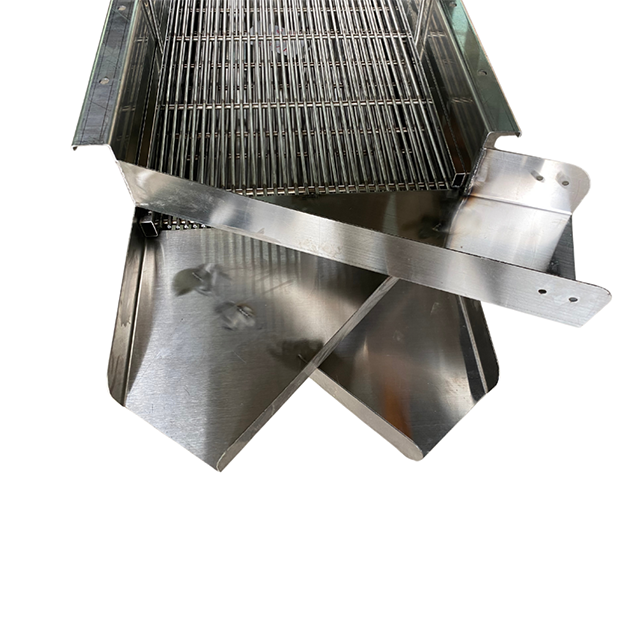
While blockages in linear vibrating screens are not inherently common, they do occur, especially when materials with sticky, moist, or fine particles are involved. Additionally, if the machine is improperly maintained or settings are incorrect, blockages are more likely to happen. It’s important to understand the conditions under which these blockages may occur so that preventive measures can be taken.
For example, industries like food processing often deal with fine powders that are prone to clogging. These blockages, while manageable, can result in significant downtime if not addressed promptly.
The likelihood of blockages occurring in a linear vibrating screen depends on various factors, including:
● Material Type: Some materials, such as sticky or moist substances, are more likely to clog the screen.
● Mesh Size: Incorrect mesh sizes can lead to material accumulation, causing blockages.
● Feed Rate: Overloading the machine increases the risk of blockages.
● Vibration Intensity: Insufficient vibration can cause material to settle on the mesh, leading to blockages.
By properly adjusting these factors, businesses can minimize the risk of blockages and ensure the machine operates at optimal efficiency.
Preventing blockages requires a combination of proper setup and routine maintenance. Here are some actionable tips to reduce the chances of blockages:
1. Choose the Right Mesh Size: Use the appropriate mesh size based on the material being processed.
2. Monitor Feed Rates: Avoid overloading the machine by maintaining a consistent and appropriate feed rate.
3. Adjust Vibration Settings: Ensure that the vibration intensity is calibrated based on the material type.
4. Regular Cleaning: Keep the screen clean to prevent material buildup.
By adhering to these preventive measures, businesses can reduce the likelihood of blockages and maintain smooth operations.
Rotary screens use a rotating drum to separate materials, while linear vibrating screens use linear vibration. In terms of blockage tendencies, rotary screens are more prone to clogging, especially with finer materials, because the material is continuously exposed to the screen. On the other hand, linear vibrating screens use a constant vibration, which helps prevent materials from settling on the screen and causing blockages.
Trommel screens are cylindrical and rotate the material through a drum, whereas vibrating screens use linear motion. Trommel screens are more effective for coarse materials but are often prone to blockages when dealing with finer particles. Linear vibrating screens, due to their constant motion and adjustable settings, tend to be more efficient at handling fine particles with minimal risk of clogging.
Linear vibrating screens are ideal for materials that require precise separation. They provide a controlled, linear motion that prevents material buildup on the screen, making them less prone to blockages compared to other types of screens.
Routine cleaning and inspections are crucial to maintaining the machine’s performance. By cleaning the mesh regularly and inspecting the components, you can prevent the accumulation of materials that might cause blockages. It’s also important to replace worn-out components to ensure the machine operates smoothly.
Maintenance Task | Frequency | Purpose |
Cleaning the screen mesh | Weekly or bi-weekly | Prevent material buildup and ensure smooth flow. |
Inspecting the motor | Monthly | Ensure proper motor function and prevent failure. |
Replacing mesh when needed | Every 6 months | Maintain effective separation and prevent blockages. |
Regularly replacing or adjusting the mesh is essential to prevent clogging. As mesh wears out or becomes damaged, it can cause material to accumulate, leading to blockages. Make sure to choose the right mesh size for the material being processed.
To avoid blockages, the vibration motor must be properly calibrated. This ensures that the vibration intensity is appropriate for the materials being processed, which helps prevent material from accumulating on the screen. Proper calibration also reduces the strain on the motor, extending the machine’s lifespan.
Lubricating the motor and other moving parts helps prevent wear and tear, which can lead to malfunctions. Proper lubrication ensures that the machine runs smoothly and efficiently, reducing the likelihood of blockages due to mechanical issues.
If a blockage occurs, there are several methods to clear the screen. Simple tools like brushes or compressed air can help remove caked material. In more severe cases, you may need to replace the mesh to ensure the machine continues to function properly.
In industries like mining and food processing, companies have successfully reduced blockages by optimizing their linear vibrating screen settings. For example, a food processing plant saw a significant reduction in downtime after adjusting the feed rate and choosing the right mesh size.
Experts recommend adjusting the vibration intensity based on the material, maintaining regular cleaning and inspections, and choosing the correct mesh size to optimize screen performance. These practices help prevent blockages and improve the overall efficiency of the machine.
Linear vibrating screen machines are efficient and reliable, but like all machinery, they can experience blockages if not properly maintained. Norden, with over 20 years of experience, has been committed to delivering high-quality and advanced linear vibrating screen machines. The company’s strong technical force and advanced equipment ensure the production of top-tier machines. By understanding the causes of blockages and implementing preventive measures such as selecting the right mesh size, monitoring feed rates, and maintaining vibration intensity, businesses can minimize downtime and improve their operational efficiency. Regular maintenance, inspections, and proper setup are essential in ensuring that the machine continues to perform optimally.
Tip: Regularly inspect and clean the screen mesh to prevent material buildup, which can lead to blockages.
A: A Linear Vibrating Screen Machine can experience blockages, particularly when the mesh size is too small for the material being processed or when materials are sticky or fine. However, with proper maintenance, correct mesh selection, and vibration calibration, the risk of blockages can be minimized.
A: Blockages in a Linear Vibrating Screen Machine are usually caused by improper screen mesh size, excessive feed rates, or insufficient vibration intensity. Sticky or moist materials are also more prone to causing clogging.
A: To prevent blockages, ensure the mesh size matches the material, adjust vibration intensity appropriately, and avoid overloading the machine with excessive feed rates. Regular maintenance and cleaning are essential for optimal performance.
A: Alternatives like rotary screens or trommel screens may be used in certain industries, but they often come with their own set of blockage risks. The Linear Vibrating Screen Machine remains one of the most efficient options for minimizing blockages when maintained properly.


