- Home
- Machine
- Media
- Application
- Service
- About Us
- Blogs
- Contact Us
- All
- Product Name
- Product Keyword
- Product Model
- Product Summary
- Product Description
- Multi Field Search


Views: 0 Author: Site Editor Publish Time: 2026-07-28 Origin: Site
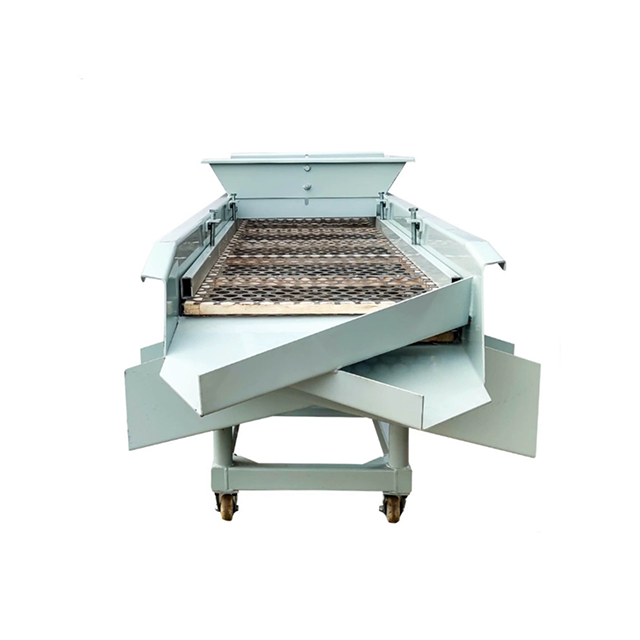
Fugitive dust in dry separation processes presents a severe operational hazard that goes far beyond simple material loss. When fine powders escape the screening zone, they settle on motor bearings, contaminate adjacent processing lines, and create environments highly susceptible to combustion. Facility safety, regulatory compliance, and equipment longevity are directly compromised by inadequate dust management. Relying on a basic ventilation fan is a guaranteed path to OSHA or ATEX compliance failures and hazardous working conditions. Facilities require a highly engineered dust management strategy that integrates mechanical containment, active extraction, and targeted suppression setups specifically designed for the dynamic forces of a Linear Vibrating Screen Machine. This guide breaks down the technical mechanics of dust generation during linear sieving and provides actionable implementation strategies. You will learn how to balance airflow, select appropriate filtration media, and configure dust collection networks to maintain safe, efficient, and compliant screening operations without pulling viable product into your exhaust system.
To implement an effective dust control setup, operators must define exact success criteria. A controlled environment maintains a slight negative pressure within the screening chamber without altering the material cut point or pulling viable product into the extraction system. You cannot manage what you do not measure, and understanding the physical mechanics of how dust becomes airborne is the first step in designing a functional extraction network.
Dust typically escapes from specific transition zones on a screening unit. Identifying these points is the first step in containment. If you walk a plant floor, you will notice dust accumulation heavily concentrated around specific mechanical junctions.
The specific trajectory and throwing action of a linear vibrating screen machine aerates fine powders. This aggressive motion creates localized positive pressure zones inside the deck. As the material bounces forward at a specific stroke angle, the displaced air forces fine particles outward through any available gap. The kinetic energy transferred to the particles overcomes their terminal settling velocity, keeping them suspended in the air inside the screening chamber. If the chamber is not sealed or under negative pressure, this dust-laden air will find the path of least resistance into the surrounding facility.
Engineers must calculate the natural air displacement volume generating dust emissions. This calculation dictates the required extraction capacity to maintain negative pressure. Guessing the required CFM leads to either inadequate dust capture or excessive product loss.
A multi-layered approach yields the best results. Relying solely on extraction wastes energy and product, while relying only on containment often fails due to the positive pressure generated by the screening action. You need a combination of physical barriers and active air management.
Mechanical containment is the foundation of dust control. A well-sealed stainless steel vibrating screen reduces the burden on active extraction systems. If your equipment leaks like a sieve, no dust collector in the world will keep your plant clean.
Active extraction removes the airborne dust that passive containment cannot hold. Position extraction hoods and pick-up points close to areas of high turbulence, such as the feed inlet and discharge chutes. The goal is to create a slight negative pressure within the screening chamber. This ensures any micro-leaks draw air inward rather than expelling dust outward into the facility. Proper hood design is critical; a flanged hood will draw air from the target area much more efficiently than a raw open duct.
For operations handling heavy aggregates, suppression offers a practical alternative to dry extraction. Implement high-pressure micro-mist or water spray nozzles at the feed chute to knock down dust particles before they become airborne. Evaluate feasibility based on material moisture sensitivity. This method is highly effective for an industrial material screening machine processing rock, coal, or sand but remains completely inapplicable for hydro-sensitive materials like cement or food-grade powders like flour.
| Control Method | Primary Mechanism | Best Application | Limitations |
|---|---|---|---|
| Passive Containment | Physical barriers, gaskets, flexible boots | All screening applications as a baseline | Cannot handle positive pressure buildup |
| Active Extraction (LEV) | Negative pressure, ductwork, filtration | Fine powders, combustible dusts, pharmaceuticals | Requires precise CFM balancing to avoid product loss |
| Wet Suppression | Water misting, particle agglomeration | Aggregates, mining, outdoor screening | Adds moisture to product, freezing risks in winter |
Proper sizing prevents product loss and ensures ductwork remains clear. An optimized network balances extraction force with material retention. If your ducts are plugging up, your transport velocity is too low. If your filters are blinding daily, your capture velocity is too high, or your filter media is wrong.
Airflow capacity varies significantly based on production scale. Small-scale or R&D setups typically require 100 to 400 CFM. Standard industrial applications range from 400 to 1,000 CFM, while heavy-duty, high-throughput systems demand 1,000 to 3,000+ CFM. Operators must differentiate between capture velocity and transport velocity. Capture velocity is the airspeed needed to pull dust into the extraction hood. Transport velocity is the airspeed required to keep particles suspended in the ductwork, preventing settling and blockages. For heavy industrial dust, transport velocities often need to exceed 4,000 FPM.
Efficient ductwork design preserves static pressure and minimizes maintenance. Utilize flow meters and adjustable blast gates at all collection points to balance pressure across the network. Minimize bends, sharp elbows, and horizontal runs in the ducting to maintain optimal transport velocity. When a bend is necessary, use long-radius sweeps rather than hard 90-degree elbows to reduce friction loss and prevent abrasive wear on the duct walls.
Selecting the correct filter media depends entirely on the material characteristics. Using the wrong filter will shut down your operation within hours.
Evaluate whether to recirculate clean air within the facility or vent it outdoors. Recirculation saves on HVAC heating and cooling costs but requires secondary HEPA safety filters to protect workers from ultra-fine bypass dust in the event of a primary filter failure. Direct outdoor exhaust venting requires regulatory clearance, air permits, and careful management of environmental emissions, especially in residential or heavily regulated industrial zones.
The scale of the operation dictates the complexity, footprint, and capital expenditure of the dust control setup. A one-size-fits-all approach does not work in bulk material handling.
For a small linear sieve machine, mobile, standalone dust extractors with built-in HEPA filtration offer high operational flexibility and lower upfront costs. Utilize dual-stage cyclone pre-separators to capture larger particles before they reach the primary filter, preventing premature blinding. The trade-off involves frequent manual filter maintenance and limited CFM capacity. These units are ideal for batch processing, pharmaceutical cleanrooms, or pilot plants where equipment is frequently reconfigured.
Large-scale operations require integrating the sieve into a centralized facility dust collection system, utilizing large baghouses or industrial cyclone separators. Implement automatic pneumatic pulse-jet cleaning systems to maintain continuous throughput without manual intervention. While this requires high capital expenditure and complex duct routing, it provides automated continuous operation and massive volumetric capacity capable of handling multiple screening lines simultaneously.
Designing a dust control system involves navigating specific operational risks. Proactive mitigation ensures safety, efficiency, and compliance with local fire codes.
A successful dust control setup requires a multi-layered approach. Start with robust mechanical containment on the screening equipment, supplement it with calculated active extraction, and optimize the system via precise airflow balancing. Evaluate dust control vendors based on their ability to perform custom airflow calculations and provide ATEX/NFPA-compliant engineering drawings, rather than just selling off-the-shelf fans.
A: Calculate CFM by determining the displaced air volume, factoring in the open area of the screen, the bulk feeding rate, and the required capture velocity to maintain negative pressure at all transition points.
A: Install expansion chambers or drop-out boxes near the extraction hood. These devices reduce air velocity, allowing heavier, viable product to fall back into the process stream while finer dust continues into the ductwork.
A: Use dry collectors for valuable, recoverable powders or combustible dusts requiring ATEX compliance. Use wet scrubbers for heavy, moisture-tolerant minerals where dry collection poses high maintenance or explosion risks.
A: FDA-approved, anti-static polyurethane or silicone corrugated boots are ideal. They offer excellent chemical compatibility, isolate vibration effectively, and prevent static buildup during operation.
A: Dust settles when the transport velocity drops below the required threshold to keep particles suspended. This often results from oversized ducts or improper blast gate adjustments. Adjust the gates to increase airspeed.
A: While passive containment works for highly granular, non-friable materials, processing fine powders universally requires active local exhaust ventilation (LEV) to ensure operator safety and prevent facility contamination.