- Home
- Machine
- Media
- Application
- Service
- About Us
- Blogs
- Contact Us
- All
- Product Name
- Product Keyword
- Product Model
- Product Summary
- Product Description
- Multi Field Search


Views: 0 Author: Site Editor Publish Time: 2026-04-28 Origin: Site
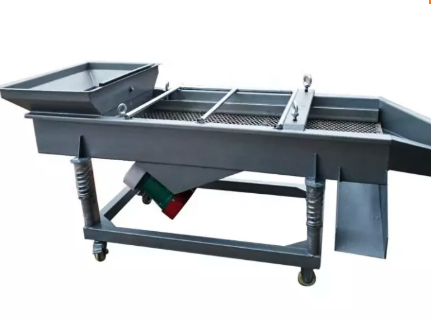
Selecting the right linear separation equipment presents a significant engineering challenge. Plant managers must balance throughput, grading precision, and operational footprint. Over-specifying machinery wastes capital. Under-specifying creates immediate production bottlenecks. A Linear Vibrating Screen Machine utilizes dual counter-rotating unbalanced motors. These motors generate a distinct straight-line motion. This configuration makes it the industry standard for high-capacity sizing, washing, and dewatering tasks. It generally outperforms the spiral motion of traditional circular screens in these specific applications.
You need structured knowledge to make informed procurement decisions. This guide breaks down the core subtypes of linear screens. We provide exact engineering formulas for equipment sizing. You will learn how to match specific screen types to your raw material requirements. We aim to help technical buyers confidently shortlist the correct equipment and avoid costly installation errors.
Linear vibrating screens are categorized by their application profile: heavy-duty scalping, high-precision stacking, high-frequency dewatering, and multi-incline (banana) configurations.
Capacity and yield follow strict engineering principles: the number of decks ($N$) always yields $N+1$ separated fractions.
Accurate selection requires calculating effective screening area (typically 80-85% of nominal area) and applying a 2.5–3x width multiplier against the maximum lump size to prevent blockages.
Baseline industrial linear screening units typically range from $2,300 to over $11,000, heavily dependent on deck quantity, throughput requirements (t/h), and construction materials (mild vs. stainless steel).
You must categorize machines by their structural design and industrial application. Plant engineers need to align equipment with specific material needs. Choosing the wrong subtype causes immediate processing bottlenecks. Below, we examine the four primary configurations found in modern plants.
We use scalping screens for primary separation. They protect expensive downstream crushers from uncrushable debris. These robust units handle extreme lump sizes. Some heavy-duty models easily accept rocks with up to a 1,000 mm edge length. Throughput capacities often exceed 1,500 cubic meters per hour.
Manufacturers reinforce these machines with thick wear-resistant liners. They build robust impact zones to absorb massive shock loads. You typically install them directly under a primary feed hopper. They take the heaviest beating of any machine in a crushing circuit.
You need multi-deck machines for fine-to-medium particle separation. They handle sizes spanning from a microscopic 20 μm up to 4 mm. These machines can incorporate up to 15 stacked screen decks. This vertical design produces multiple precise fractions simultaneously.
They accomplish this complex sorting in a single pass. The stacked configuration saves massive amounts of floor space. We often see them utilized in high-value chemical processing, pharmaceuticals, or mineral sand separation. They rely on high-frequency, low-amplitude linear motion to prevent fine mesh blinding.
Plant operators optimize these machines for solid-liquid separation. They work exceptionally well for desliming and fine particle recovery. Coal-washing and mineral processing plants rely heavily on them to manage tailings. These units operate at a flat or slightly upward incline.
The incline typically ranges from 0° to 5°. This slight uphill angle builds a thick material bed at the discharge end. The bed itself acts as a secondary filter medium. It forces water down through the screen while pushing dry solids forward up the hill.
These feature a distinctly stepped deck profile. The deck angle decreases along the length of the machine. It starts very steep at the feed point. It gradually flattens toward the discharge end. This geometry is ideal for high-moisture materials.
It easily handles high fines content. The steep initial angle rapidly thins the incoming material bed. This quick thinning prevents immediate clogging at the feed zone. It drastically increases overall throughput compared to standard flat linear screens.
Use the following table to quickly reference the operational limits of each linear screen subtype.
Screen Subtype | Primary Function | Target Particle Size | Typical Installation Angle |
|---|---|---|---|
Heavy-Duty Scalping | Equipment protection, gross sizing | 50 mm to 1,000 mm | 0° to 10° (Declined) |
High-Precision Stack | Fine multi-fraction sorting | 20 μm to 4 mm | 0° to 5° (Declined) |
High-Frequency Dewatering | Moisture removal, tailings recovery | Sub-millimeter slurries | 0° to 5° (Inclined upward) |
Banana (Multi-Incline) | High-capacity sizing for mixed fines | Mixed (Fines to medium) | Stepped (e.g., 35° -> 20° -> 5°) |
You must map machine types to your primary operational outcomes. Plant managers typically solve for four distinct bulk material challenges. Understanding your core objective dictates which screen you purchase.
This process involves separating mixed bulk materials into distinct size categories. You separate the feed into oversize, good product, and fines. An effective Linear Vibrating Screen Machine stratifies the material bed perfectly. The straight-line vibration pushes larger particles to the top of the bed. Smaller particles sift down to the mesh layer and pass through. Consistency here dictates the quality of your final saleable product.
Scalping is a targeted separation strategy. You rapidly remove a small percentage of oversized material from the main product stream. Scalping protects downstream crushers, mills, and conveyors from catastrophic damage. It prevents massive uncrushable objects—like tramp metal or oversized boulders—from jamming your system. Scalping requires robust frame engineering and impact-resistant decks.
Here, you remove liquid from wet slurries. The goal is producing a stackable, transportable solid cake. High-frequency linear vibration breaks the surface tension of the water holding the particles together. The upward incline forces the solids up a hill. Gravity pulls the freed water down through specialized polyurethane panels. This mechanical dewatering drastically reduces thermal drying costs downstream.
You utilize linear motion combined with overhead water spray bars. High-pressure water washes away clay, dust, and ultra-fine contaminants. You clean the primary product before final processing or shipping. Operators place spray bars at strategic intervals along the screen deck. The intense linear vibration agitates the material, ensuring the water rinses every particle thoroughly.
You must use hard engineering formulas when selecting a machine. Rules of thumb demonstrate technical authority and assist in accurate equipment sizing. Do not rely on visual guesswork. Follow these structured engineering principles to ensure optimal capacity.
The Deck-to-Fraction Rule: You must factor in a basic mathematical constant. A machine with N decks will produce N+1 fractions. For example, a 3-deck screen yields 4 distinct material grades. Do not buy a 4-deck screen if you only need 3 sizes. Extra decks increase maintenance difficulty and require significantly more vertical clearance.
Calculating Machine Dimensions: You must calculate width and length independently based on feed characteristics.
Width vs. Lump Size: Your screen width should be at least 2.5 to 3 times the largest material lump size. This ratio prevents feed zone blockages. If large rocks bridge across the feed chute, your entire production stops.
Length-to-Width Ratio: Optimal linear screen design dictates an L:W ratio between 2:1 and 3:1. This geometry ensures sufficient residence time. Material needs time to travel and stratify. If the screen is too short, fine particles carry over into the oversize chute.
Aperture (Mesh) Sizing Multipliers: You cannot simply match mesh hole size to your desired separation size. For fine-particle linear screening, apply a strict multiplier. The physical mesh hole size should typically be 2 to 2.2 times the target separation particle size. You must account for material trajectory. Particles bounce across the deck and approach holes at an angle. The 2.2x multiplier compensates for these dynamic screening physics.
Effective vs. Nominal Area: Procurement teams often make a critical sizing mistake here. You should base capacity calculations on the effective screening area. Do not use the machine's nominal physical dimensions. Historically, effective area is only 80% to 85% of the nominal area. Clamping mechanisms take up space. Sidewalls create dead zones where material does not screen properly. Always apply the 0.85 multiplier to your capacity math.
Common Mistake: Engineers frequently ignore the effective area multiplier. They calculate capacity based on the outer dimensions of the screen frame. This consistently results in undersized equipment and persistent plant bottlenecks.
You must highlight physical implementation requirements early in the project. Evaluate potential operational risks before pouring concrete. Linear machines present unique installation advantages, but they demand careful structural planning.
Traditional inclined circular screens sit at 15° to 30°. Linear screens offer a unique physical advantage. They are uniquely capable of horizontal installation. You can install them completely flat at 0° to 5°. This makes them the standard choice for plants with strict vertical headroom limitations. You save massive amounts of structural steel and capital when you build a shorter plant.
You must weigh different metal alloys based on your environment. Mild steel is highly cost-effective. It serves perfectly for standard dry applications like quarrying. Stainless steel is entirely different. It is essential for wet processing and coal washing. You absolutely need it for corrosive chemical environments. Furthermore, sanitary food and pharmaceutical standards legally mandate high-grade stainless steel. Understand your material's moisture content and acidity before choosing standard mild steel.
You must deeply evaluate the core suspension components. Inspect the drive beams. Analyze the dual unbalanced motors or magnetic vibrators. Check the elastic support elements. You want to ensure intense vibration is not transferred to the surrounding plant infrastructure. If the isolation fails, you will crack concrete floors and damage adjacent structural steel.
Follow these best practices for vibration isolation:
Use heavy-duty steel coil springs for high-temperature or heavy-load applications.
Install premium rubber buffers or air springs in environments requiring ultra-low noise emissions.
Ensure the supporting steelwork is completely rigid; a flexible support structure amplifies resonant frequencies.
Routinely inspect isolation mounts for uneven wear, which causes dangerous lateral swaying.
Choosing the right linear vibrating screen requires methodical planning and precise mathematical sizing. You cannot purchase these units off the shelf without evaluating your specific material characteristics. Ensure you map the exact screen subtype to your primary goal, whether that is heavy-duty scalping or fine particle dewatering.
Here are your action-oriented next steps:
Consolidate your bulk material data, including bulk density, maximum lump size, and moisture content.
Calculate your required effective screening area using the 85% rule to avoid undersizing.
Determine your plant's vertical footprint constraints to decide if a horizontal linear screen is mandatory.
Request a custom specification sheet and technical consultation from a trusted manufacturer to run dynamic capacity calculations.
A: A linear screen uses two counter-rotating motors to generate a straight-line motion. It is ideal for high-capacity sizing, dewatering, and horizontal installations with low headroom. A circular screen uses a single motor to create a spiral motion. It operates on a steep incline and is generally better suited for tough, cohesive materials that need to tumble.
A: Yes. Specific subtypes, namely high-frequency linear screens and banana screens, are heavily utilized for wet materials. High-frequency units excel in dewatering and desliming applications, while banana screens use a steep initial drop to quickly thin out sticky, high-fines material beds before they can clog the mesh.
A: You prevent blinding by using proper mesh sizing—specifically applying the 2 to 2.2x aperture multiplier. Additionally, you can install flexible polyurethane anti-blinding decks, bouncing rubber balls underneath the mesh, or ultrasonic vibration attachments to dislodge wedged particles continuously.