- Home
- Machine
- Media
- Application
- Service
- About Us
- Blogs
- Contact Us
- All
- Product Name
- Product Keyword
- Product Model
- Product Summary
- Product Description
- Multi Field Search


Views: 0 Author: Site Editor Publish Time: 2026-01-27 Origin: Site
Centrifugal polishing machines are critical for manufacturers seeking to refine parts efficiently. These machines use high-speed centrifugal force to polish, deburr, and finish materials with precision. In this article, we will explore the two main types: Centrifugal Barrel Finishers (CBF) and Centrifugal Disc Finishers (CDF). You will learn how to choose the right machine based on your specific needs to optimize productivity and achieve the desired surface quality.
Centrifugal Barrel Finishers (CBF) use the power of centrifugal force to process parts in rotating barrels. The barrels spin in a way that generates high G-forces, typically up to 30 times the force of gravity. This force causes the parts and media inside the barrel to tumble and grind against each other. The process allows for quick removal of material, polishing of surfaces, and achieving a consistent finish across the workpieces.
The high G-forces ensure fast processing, which is particularly useful for high-precision parts that require both deburring and polishing in a short period. The rotation is carefully controlled to match the specific needs of the job, whether it’s aggressive deburring or finer polishing.
When choosing the right centrifugal barrel finishing machine, different barrel configurations are designed to suit various manufacturing needs. Below are the most common types of centrifugal barrel configurations, along with their applications, technical specifications, and important considerations.
| Configuration Type | Application | Technical Specifications | Considerations |
|---|---|---|---|
| Horizontal Barrel | Ideal for heavy-duty deburring and polishing, handling large volumes of workpieces. | G-force: 30G, Processing Capacity: High | Suitable for large-scale production; ensure stable machine operation. |
| Vertical Barrel | Used for compact designs or parts requiring specific vertical orientation. | G-force: 20G, Processing Capacity: Medium | Suitable for small parts or specific geometries. |
| Removable Barrel | Designed for smaller operations, offering easy access and barrel swapping. | G-force: 25G, Capacity: Medium | Best for versatile operations, with manual handling required. |
Tip: If your operation requires efficient processing of large volumes of parts with precise deburring and polishing, the horizontal barrel configuration will significantly boost production efficiency.
Centrifugal Barrel Finishers are specifically designed for high-precision applications where achieving a flawless surface finish is essential. Their ability to generate high G-forces makes them ideal for materials that require intensive material removal and polishing in a short time. For industries like aerospace, medical device manufacturing, and jewelry, where parts must meet stringent quality standards, these machines ensure consistent results. They are particularly valuable for parts such as turbine blades, dental implants, and precision metal components, where even the smallest imperfections could affect performance or safety. With advanced control features, operators can fine-tune processing parameters for optimal results, making these machines indispensable for critical applications.
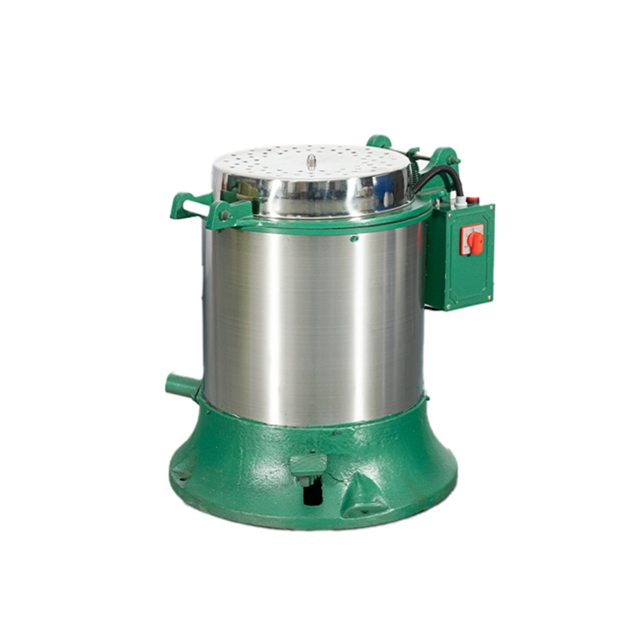
Centrifugal Disc Finishers (CDF) are another type of centrifugal polishing machine. Instead of barrels, these machines use a rotating disc at the base of the chamber, with the workpieces and abrasive media being forced outward and upward by centrifugal forces. The media and parts then fall back toward the center of the disc, generating a continuous toroidal flow that polishes and smoothens the surfaces.
This action is highly effective at finishing small, intricate parts and provides fast, consistent results. CDF machines are faster than traditional vibratory tumblers and are more suitable for applications where fine detail and high-speed processing are required.
Centrifugal Disc Finishers (CDF) are known for their speed and versatility, offering features that make them ideal for high-efficiency, high-precision applications. Below is a detailed breakdown of their key features, including speed, automation, and control options, to help you better understand the machine's capabilities.
| Feature | Description | Technical Specifications | Application Scenarios | Considerations |
|---|---|---|---|---|
| Processing Speed | CDF machines can reduce cycle times by up to 10 times compared to vibratory finishers. | Speed: Up to 10x faster than vibratory finishers | Ideal for rapid mass production and high-volume operations. | Suitable for small parts requiring fast, detailed processing. |
| Automation Options | Many CDF machines feature automatic part separation and unloading systems, increasing throughput and reducing manual labor. | Automation: Automatic separation and unloading systems | High-efficiency batch production, reducing manual intervention. | Ensure the automation system is adaptable to different part types. |
| Speed Control | Variable speed controls allow manufacturers to fine-tune the intensity of the polishing process depending on the material and desired finish. | Speed Range: 0-220 RPM | Adjustable for different polishing intensities based on material. | Control the speed range to ensure precise adjustments based on part material and shape. |
Tip: If you need to boost production efficiency and reduce manual labor, choosing a CDF machine with automatic separation and unloading systems will greatly enhance production, especially for high-volume small parts processing.
Centrifugal Disc Finishers excel in applications where high precision and fast processing are required for small and intricate components. Their ability to produce fine, mirror-like finishes makes them ideal for industries such as jewelry manufacturing, where detailed polishing of delicate items like rings and pendants is essential. Additionally, they are invaluable in aerospace and automotive industries for polishing small mechanical parts, such as fasteners and connectors, ensuring smooth surfaces and improved component longevity. The high G-forces generated in CDF machines also allow for rapid deburring and edge radiusing, crucial for these high-performance applications.
Tip: For high-volume production of small, intricate parts, centrifugal disc finishers provide excellent efficiency and consistency.
Centrifugal Barrel Finishers (CBF) are designed to handle large volumes of material removal with high G-forces, making them ideal for heavy-duty deburring and polishing. The powerful forces allow CBF machines to process larger parts efficiently, making them essential for industries such as aerospace and automotive. In contrast, Centrifugal Disc Finishers (CDF) are optimized for high-speed, fine polishing, especially for smaller components like jewelry or precision medical parts, ensuring consistent results with minimal cycle times.
CDF machines typically feature advanced automation options such as automatic part separation and unloading systems, which streamline operations for continuous production. This makes them highly suited for industries requiring consistent output with minimal manual intervention. While CBF machines can be automated, they usually still require more manual involvement, especially in smaller operations where parts need to be loaded and unloaded by hand. CDF’s automation capabilities lead to greater efficiency in large-scale manufacturing.
Centrifugal Barrel Finishers are better for larger, more complex parts that need higher G-forces for aggressive deburring or polishing. Meanwhile, Centrifugal Disc Finishers are more suited for smaller, intricate parts where precision and speed are critical.
Tip: Choose a CDF machine if you are processing small, delicate parts and need consistent, fast results, and opt for a CBF machine if you need to handle larger or more complex parts.
When selecting between CBF and CDF machines, the size and shape of the parts are crucial. If you are processing large or heavy components, CBF machines may be more suitable. For smaller parts, CDF machines are often the better choice, as they offer faster, more efficient processing for fine finishes.
The desired finish quality is a critical factor in determining whether to use Centrifugal Barrel Finishers (CBF) or Centrifugal Disc Finishers (CDF). CBF machines are suited for rough finishes and aggressive deburring, while CDF machines are ideal for achieving high-luster, mirror-like finishes on smaller parts. Below is a detailed comparison of the two types based on their finish quality capabilities.
| Feature | CBF Machines | CDF Machines | Considerations |
|---|---|---|---|
| Finish Type | Ideal for rough finishes and aggressive deburring. | Best for high-luster, mirror-like finishes. | CBF is suited for heavy-duty tasks, while CDF excels at fine finishes. |
| Surface Quality | Produces smooth surfaces but not as fine as CDF. | Provides ultra-smooth, polished surfaces. | CDF is better for parts requiring aesthetic appeal. |
| Best Application | Large components needing fast material removal. | Small, delicate parts like jewelry and medical implants. | CBF is great for parts with high material volume; CDF is ideal for intricate parts with fine details. |
| G-Force | High G-force (up to 30G) for aggressive polishing. | Moderate G-force for precision polishing. | High G-forces in CBF machines lead to faster deburring but less finesse. |
| Cycle Time | Longer cycles due to aggressive deburring. | Shorter cycles, ideal for fine polishing. | CDF machines can achieve better finishes in less time. |
Tip: If you need to achieve a high-gloss or mirror-like finish on small, intricate parts, a CDF machine is the best choice. For larger parts requiring rapid deburring or material removal, opt for a CBF machine.
If you have high production volume needs and require fast turnaround, CDF machines may be the better choice due to their faster processing speeds. For batch processing with larger parts, CBF machines are often more effective. For high-volume production with smaller parts requiring precision, CDF machines are the go-to choice. If you need to process larger parts with a focus on deburring, CBF machines will be more suitable.
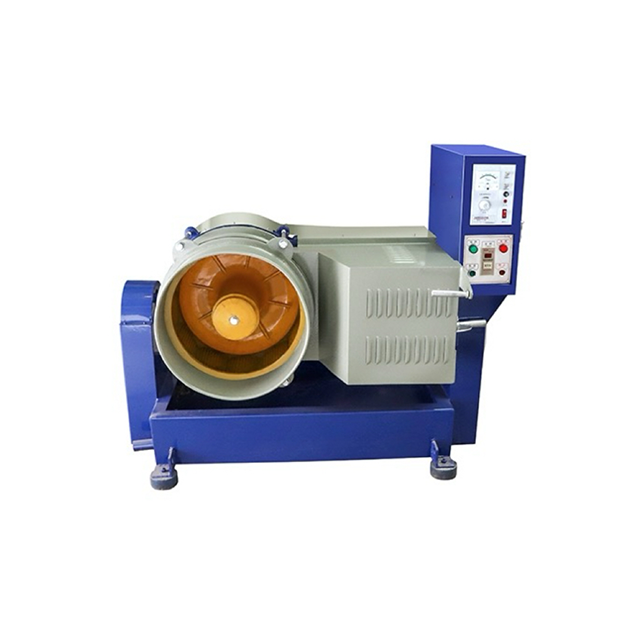
Automation in centrifugal polishing machines not only enhances consistency and reduces labor costs but also improves the overall efficiency of the polishing process. By incorporating features like automatic loading, unloading, and part separation, these machines can handle larger batches with minimal human intervention, reducing the risk of human error. This leads to more uniform results, faster processing times, and a smoother production flow. Additionally, automated systems often come with programmable settings that allow for precise control over cycle times, polishing intensity, and finish quality, ensuring that each part meets the desired specifications without requiring constant supervision.
Centrifugal Disc Finishers are equipped with built-in automation options like automatic unloading and part separation, making them ideal for continuous production. In contrast, Centrifugal Barrel Finishers are typically more manual but can also be automated for larger operations with the addition of robotic arms or automated loading systems. The following table compares the automation capabilities of both types of machines.
| Feature | Centrifugal Disc Finishers | Centrifugal Barrel Finishers | Considerations |
|---|---|---|---|
| Automation Features | Built-in automatic unloading and part separation | Manual loading/unloading; can be automated with additional systems | CDF machines are better suited for continuous production; CBF machines can be upgraded for automation. |
| Automation Options | Fully automated for high-volume continuous production | Requires manual intervention, but can be automated for large operations | CDF machines simplify operations; CBF automation systems may require robotic arms. |
| Production Scale | Ideal for small to medium parts and high-volume continuous operations | Best for large, complex parts, but automation systems are optional | CDF is best for small part handling at high speeds; CBF is suited for larger parts needing higher G-forces. |
| Cycle Time | Shorter cycle times due to automation and continuous operation | Longer cycle times, especially in manual setups | Automation in CDF allows for faster throughput and consistency. |
| Flexibility | Less flexible for manual intervention; optimized for continuous production | More flexible, especially with added automation, allowing for more varied part sizes | CBF machines offer more flexibility in handling different parts. |
Tip: For a high-efficiency, automated operation with minimal human error, consider investing in a centrifugal disc finisher with built-in automation. For larger, complex parts that may require automation, centrifugal barrel finishers with robotic arms are an excellent choice.
In the jewelry industry, centrifugal polishing machines are indispensable for achieving flawless finishes on intricate and delicate pieces. The high-speed centrifugal force allows jewelers to achieve smooth, reflective surfaces on precious metals like gold, silver, and platinum, enhancing both the aesthetic appeal and durability of the pieces. These machines provide consistent results, essential for high-volume production, and ensure that the fine details of intricate designs are not lost during polishing, resulting in pieces that meet the highest standards of craftsmanship.
The aerospace and automotive industries rely heavily on centrifugal polishing machines to ensure that metal parts such as turbine blades, engine components, and gears are finished to exacting specifications. These machines are capable of achieving high precision, ensuring parts are deburred, polished, and free from imperfections that could compromise performance. The use of centrifugal polishing machines in these sectors guarantees that components are not only visually appealing but also capable of withstanding the demanding conditions of high-performance environments, ensuring safety and longevity.
In the medical device industry, centrifugal polishing machines are crucial for finishing components like surgical tools and dental implants, where surface quality and precision are paramount. These machines help remove sharp edges, burrs, and other imperfections that could affect the safety and functionality of medical devices. By providing consistent and uniform finishes, centrifugal polishing machines ensure that each part meets stringent regulatory standards and is suitable for use in critical applications such as surgeries and implants, where precision is essential for patient safety.
Centrifugal polishing machines, such as centrifugal barrel finishers and centrifugal disc finishers, are crucial for industries requiring precision and high-quality finishes. The selection of the right machine depends on factors like part size, desired finish, and production volume. With the addition of automation, these machines offer even greater efficiency, consistency, and throughput. Norden provides advanced centrifugal polishing machines that cater to various industrial needs, offering enhanced productivity, precision, and the ability to meet demanding quality standards. Their products ensure manufacturers achieve the best results in less time, making them an essential part of modern manufacturing processes.
A: A centrifugal polishing machine uses high-speed centrifugal force to polish, deburr, and finish parts. It comes in two main types: Centrifugal Barrel Finishers (CBF) and Centrifugal Disc Finishers (CDF), each designed for specific processing needs.
A: A centrifugal polishing machine operates by spinning parts inside a barrel or disc at high speeds, generating centrifugal forces that help polish surfaces and remove burrs from materials.
A: Centrifugal polishing machines provide fast processing times, high-quality finishes, and consistency. They also help reduce manual labor and improve throughput through automation options.
A: Centrifugal polishing machines are used in industries like aerospace, automotive, medical device manufacturing, and jewelry production, where precision and surface quality are critical.
A: A Centrifugal Barrel Finisher is best for larger parts needing aggressive deburring, while a Centrifugal Disc Finisher is ideal for smaller, intricate parts, offering faster, finer polishing.


