- Home
- Machine
- Media
- Application
- Service
- About Us
- Blogs
- Contact Us
- All
- Product Name
- Product Keyword
- Product Model
- Product Summary
- Product Description
- Multi Field Search


Views: 0 Author: Site Editor Publish Time: 2026-06-30 Origin: Site
Manual metal finishing severely limits your production scalability. Hand grinding relies heavily on operator skill and daily focus. This creates inconsistent batches and drives up your labor expenses. Manufacturers need a reliable, automated method. A tumbling machine offers a standardized, repeatable solution. It easily handles high-volume mass finishing operations without complaining. We evaluate equipment options with a highly skeptical eye. Not all setups deliver promised results. This guide breaks down precise applications and equipment variations. It also covers harsh implementation realities. We want to help production engineers specify the exact right tools. Buyers will learn how to avoid common procurement pitfalls. You will discover how to match machines to specific part geometries. We will thoroughly explore consumable choices and cycle times. Proper planning ensures superior metal finishing every single time.
Application matching is critical: Success depends on aligning part geometry and material hardness with specific processes like surface deburring, radiusing, or burnishing.
Not all tumbling is equal: Centrifugal and standard barrel tumbling serve distinct production volumes and tolerance requirements.
Consumables dictate ROI: The correct ratio and selection of polishing media and compounds prevent part damage and reduce cycle times.
Hidden TCO factors: Facility requirements—including noise mitigation and wastewater management—must be factored into procurement decisions.
Engineers demand precise results from finishing equipment. You must define objective success criteria early. A standard setup achieves specific production goals. We categorize these goals into three distinct mechanical processes. Understanding these distinctions prevents costly processing errors.
Aggressive surface deburring removes heavy machining burrs rapidly. It also eliminates stubborn laser-cut dross. The equipment rotates parts alongside abrasive stones. This sliding action shears off unwanted metal protrusions. Operators see significant productivity gains over hand grinding. However, you must monitor this process closely. Uncontrolled cycle times introduce severe dimensional risks. The abrasive action does not distinguish between burrs and critical features. Long cycles may alter your precise part dimensions. Burr rollover presents another common challenge. Sometimes the metal bends instead of breaking off. You must optimize your abrasive shape to shear burrs cleanly.
Best Practice: Always establish a maximum run time based on empirical testing. Document these strict limits in your standard operating procedures.
Common Mistake: Leaving parts in the barrel longer to remove heavy slag. This destroys flat surfaces.
Many industries require strictly uniform part edges. Sharp corners create assembly hazards. They also fail modern safety compliance audits. Rotary equipment excels at edge radiusing and blending. It gently wears down sharp intersections. This creates uniform, safe-to-handle boundaries. You can easily target specific radii tolerances. Most operators aim for .005 to .015 inches. You achieve these metrics consistently across massive batches. This repeatability outperforms manual filing every time. Aerospace and medical manufacturers rely heavily on this predictable blending capability.
Sometimes parts need enhanced visual aesthetics. Other times, they require smooth surfaces for plating preparation. Polishing and burnishing fulfill these specific requirements. Operators utilize both wet and dry processing methods. Dry processing often yields a highly reflective, mirror-like finish. It uses treated organic materials like walnut shells. Wet processing keeps parts clean and prevents heat buildup. It utilizes specialized burnishing compounds. Your final finish quality depends entirely on these fluid choices. We recommend testing both methods on sample parts before finalizing your production routing.
You must choose between two primary mechanisms for your facility. Each approach offers distinct physical actions. Proper selection ensures your parts survive the process intact. We provide a clear decision framework below to guide your engineering team.
Rotary equipment relies on an aggressive sliding action. Parts and stones lift along the barrel wall. Gravity pulls them down in a continuous cascade. This creates intense friction. It works beautifully for heavy material removal and exterior surfaces. Vibratory equipment uses a very different approach. Motors generate high-frequency micro-impacts. The entire bowl shudders rapidly. This action remains much gentler overall. It suits delicate parts perfectly. The continuous micro-impacts easily penetrate deep internal cavities and complex geometries.
We developed a practical comparison framework. Use this table to guide your immediate engineering decisions.
Evaluation Criteria | Rotary / Tumbling Approach | Vibratory Finishing Approach |
|---|---|---|
Primary Action | Aggressive sliding and cascading. | Gentle, high-frequency micro-impacts. |
Best Suited For | Flat, heavy parts. Fasteners. Castings. | Delicate parts. Complex geometries. |
Material Removal | High and rapid. Excellent for heavy burrs. | Moderate. Better for fine finishing. |
Internal Cavities | Poor penetration into blind holes. | Excellent penetration and fluid flushing. |
Risk Profile | High risk of part tangling or impingement. | Low risk of impingement. Parts stay suspended. |
Choose rotary equipment when dealing with flat, heavy parts. It fits perfectly when requiring aggressive material removal. It also suits operations operating on lower budgets. Avoid rotary actions entirely when parts have deep blind holes. You must also avoid it if parts possess thin walls. Tangling remains a massive risk for wire-like components.
Equipment selection dictates your overall production scale. You must balance finishing efficiency against your expected volume. We categorize equipment into two primary operational styles.
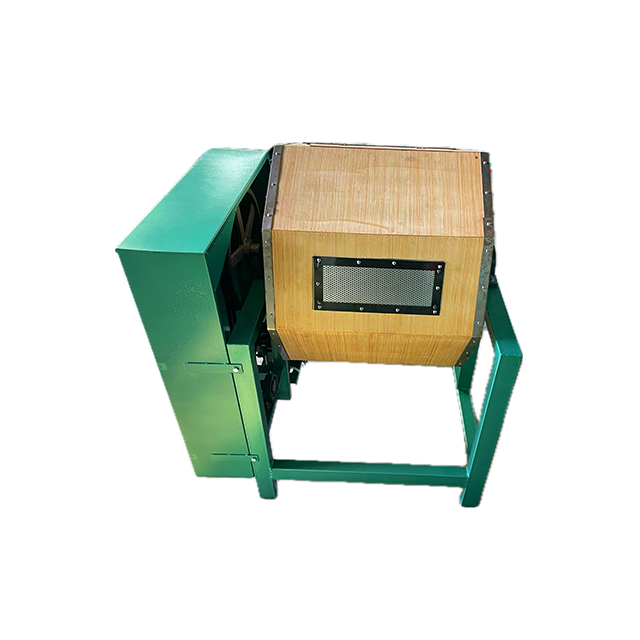
The traditional setup remains a powerful workhorse. Standard barrel tumbling provides unmatched reliability. Operators use it for extremely high-volume batches. It handles non-fragile parts exceptionally well. Fasteners, heavy stamped blanks, and robust castings thrive here. The mechanics remain incredibly simple. A motor turns a horizontal polygon-shaped barrel. This simplicity reduces mechanical breakdowns drastically.
However, you must accept one major operational drawback. Cycle times run notoriously long. Many batches require multi-hour processing. Hard steel components might require 24 hours of continuous rotation. Some facilities run them strictly overnight to save daytime labor hours. You must plan your production scheduling around these prolonged cycles.
High-value components demand faster, safer processing. Centrifugal equipment generates massive G-forces. A central turret spins in one direction. Meanwhile, four individual barrels spin oppositely. This dual-rotation creates a high-energy finishing environment.
Medical and aerospace manufacturers favor this advanced technology. It delivers ultra-smooth, isotropic finishes rapidly. Cycle times drop from several hours to mere minutes. Furthermore, it protects fragile components effectively. The extreme centrifugal force creates constant media compression. Parts remain suspended tightly within the abrasive mass. They never crash into one another. You gain speed without sacrificing part integrity.
Standard loading protocols differ significantly between machines. Follow these universal steps to prevent batch failures:
Measure your exact part volume carefully.
Calculate the required abrasive mass based on strict volume ratios.
Load components and stones into the barrel simultaneously.
Add water and chemical compounds to the specific fill line.
Secure the watertight lid tightly before engaging the primary motor.
Consumables cause the most frequent process failures. Many engineers treat them as an afterthought. You must specify these elements perfectly. Your chosen consumables act as the actual cutting tools.
Your abrasive choice dictates the cutting speed. Proper polishing media prevents severe surface damage. Manufacturers offer several distinct categories.
Ceramic: High density creates fast cutting action. It aggressively attacks hard metals. Use it for steel, iron, and titanium components. It maintains its shape incredibly well over time.
Plastic: This material offers lighter weight. It cuts gently without gouging. You should use it for soft metals. It prevents surface peening on aluminum, zinc, and brass. Plastic contains silica or alumina abrasives suspended in a polyester resin.
Steel/Porcelain: These solid options contain zero abrasives. Operators use them strictly for burnishing. They create brilliantly bright finishes. The heavy weight promotes beneficial work-hardening on the metal surface.
You must maintain a strict 3:1 volume ratio. This means three parts abrasive to one part metal. This standard rule prevents part-on-part impingement. Without enough stones, metal components collide during the rotation. Collisions cause severe dents and generate costly scrap. We strongly advise measuring volumes before every single batch. Never guess the ratio. Heavy or complex parts often require a 4:1 or even 5:1 ratio to remain safe. You ensure total separation by flooding the chamber with excess stones.
Liquids do much more than just wet the batch. Chemical compounds perform three vital functions during the cycle. First, they suspend debris and removed metal fines. This prevents dark sludge from settling into part crevices. Second, they inhibit rust on ferrous parts. Flash rusting occurs instantly on freshly exposed steel. Proper compounds provide a protective microscopic barrier. Third, they actively control the overall cutting action. Some compounds increase lubricity for a smoother finish. Others reduce lubricity to maximize the abrasive bite. You must select chemical fluids matched perfectly to your specific metal alloy.
Adoption carries several hidden friction points. Facility constraints often dictate your ultimate success. You must address these physical realities before installing any large equipment.
Undersized stones frequently ruin good parts. They lodge themselves tightly inside threaded holes. They wedge permanently into narrow slots. Operators waste countless hours manually picking stones out of finished components. You must implement strict sizing protocols. Always compare stone dimensions against your part blueprints. Buy stones significantly larger than your biggest hole. Alternatively, buy them small enough to flow freely through your smallest crevice. Diagonal measurements matter most. A cylindrical stone might fit lengthwise but wedge diagonally.
Industrial finishing impacts your factory environment heavily. These machines generate significant decibels during heavy operation. Steel sliding against steel creates an intense roar. You may easily violate local noise compliance regulations. Facilities often require dedicated acoustic enclosures. Sound-dampening curtains or dedicated rooms protect your workforce.
Wastewater management presents another serious hurdle. Wet processes create heavily contaminated effluent. The water contains metal dust, abrasive breakdown, and chemical soaps. You cannot dump this untreated liquid down the municipal drain. You must install proper filtration systems immediately. Chemical treatment systems neutralize the effluent pH before safe discharge. Failure to treat wastewater invites severe regulatory fines.
Continuous heavy friction destroys machine components eventually. Polyurethane and thick rubber barrel linings wear down constantly. These linings protect the outer steel shell from abrasive destruction. You must monitor their thickness regularly. Schedule replacement frequencies proactively. Ignoring worn linings destroys the underlying steel barrel completely. Once the abrasive wears through the rubber, it eats the metal housing. You prevent catastrophic equipment failure through routine visual inspections.
A mass finishing setup functions as a complete system. It is never just a standalone tool. Your success requires perfect alignment across multiple variables. You must harmonize the machine type, abrasives, fluid compounds, and cycle time. Changing one variable affects all the others instantly.
We strongly advise buyers to request sample processing first. Always demand pilot testing from manufacturers. Never finalize equipment specifications blindly based on brochures. Send a batch of raw parts to the vendor. Let them establish the ideal formula. Empirical testing provides the only reliable verification. It proves your expected cycle times definitively. It also guarantees your final finish quality meets engineering standards. You mitigate your procurement risks by demanding real-world proof.
A: Standard rotary barrels present high risks for fragile parts. The aggressive cascading action often bends or dents thin walls. We recommend avoiding standard rotary setups for delicate items. Instead, use high-energy centrifugal barrels or vibratory systems. These machines offer significantly safer alternatives. Centrifugal systems utilize continuous media compression to protect parts. Vibratory bowls provide a much gentler micro-impact action. Both advanced options prevent damaging part-on-part collisions during the finishing cycle.
A: Processing times vary dramatically based on your chosen equipment. Standard barrel tumbling operates slowly. It can take anywhere from 4 to 24 hours. The exact duration depends heavily on metal hardness and initial burr size. Conversely, high-energy centrifugal systems operate incredibly fast. They generate massive G-forces to accelerate the cutting action. These advanced systems typically reduce overall cycle times to just 10–45 minutes.
A: Replacement frequency depends on the abrasive type and daily usage. Ceramic options wear down gradually during each cycle. You must perform regular top-offs to maintain the critical 3:1 volume ratio. As stones shrink, they pose severe lodging risks. Once they become small enough to wedge inside part holes, you must act. The operator must screen the entire batch and replace the worn stones completely to prevent part damage.