- Home
- Machine
- Media
- Application
- Service
- About Us
- Blogs
- Contact Us
- All
- Product Name
- Product Keyword
- Product Model
- Product Summary
- Product Description
- Multi Field Search


Views: 0 Author: Site Editor Publish Time: 2026-06-27 Origin: Site
Process bottlenecks carry exceptionally high stakes in any production facility. Selecting the wrong equipment often leads to severe blinding, uneven feed rates, and costly unplanned downtime. You simply cannot afford unexpected halts when processing valuable bulk solids. Plant managers and process engineers face tough choices when evaluating machinery for dry and wet sizing, dewatering, or desliming. Each material behaves uniquely under dynamic mechanical forces. Therefore, you must carefully match your specific process needs to the exact right mechanical solution. Choosing the correct industrial sifter requires moving far past basic marketing brochures. You must rigorously evaluate motor sizing, structural integrity, and material-specific dynamics to ensure long-term success. We will guide you step-by-step through this complex equipment selection process. You will learn exactly how to assess vibration mechanics, compare deck configurations, and verify strict durability standards. By understanding these variables, you protect your bottom line from unexpected failures.
Linear screens excel at high-capacity, multi-deck particle separation, offering distinct horizontal conveying advantages over circular screens.
Accurate sizing depends not just on target throughput, but on bulk density, moisture content, and optimal G-force calculations.
Evaluating motor placement, deck configuration, and compliance standards (e.g., FDA/ATEX) is critical for minimizing long-term operational expenses.
Always require material testing and a Factory Acceptance Test (FAT) before finalizing vendor shortlists.
You must first clarify if a linear vibrating screen machine perfectly fits your exact application. Many buyers mistakenly choose linear models when circular ones suit them better, or vice versa. We need to look closely at motion trajectory and overall application suitability to set the correct baseline.
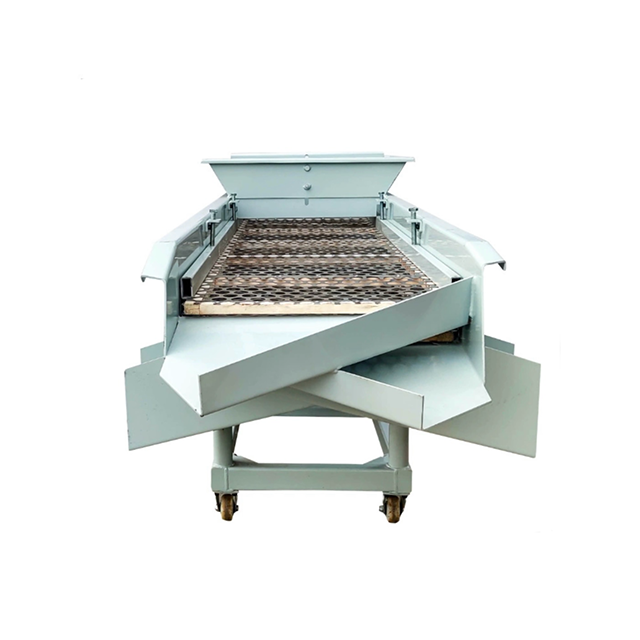
Dual-vibrating motors power these linear units. They create a distinct, straight-line kinetic motion. This dynamic force simultaneously screens and conveys material horizontally across the deck. Such horizontal conveying works perfectly in facilities facing restricted headroom. You do not need steep downward angles to move your product forward. The machine does the horizontal conveying work for you.
Linear models perform exceptionally well for medium-to-fine screening applications. They typically handle feed particles up to 50mm. They also excel at dewatering wet sand and washing coal. Conversely, circular screens work much better for heavy-duty scalping. If you process large, heavy aggregates straight from a primary crusher, choose a circular unit. A circular motion handles those massive, unpredictable impact loads far more effectively without fracturing the side plates.
You also must strongly consider your available plant space. Linear screens feature a distinct rectangular footprint. This shape directly impacts your existing plant integration. You must align your chute design with this rectangular layout. A long, narrow machine might slot easily into tight facility corridors. However, it requires highly careful feed distribution. If you simply dump material in the center of the inlet, you completely waste the outer edges of the mesh.
Feature | Linear Screen | Circular Screen |
|---|---|---|
Motion Trajectory | Straight line / Horizontal | Circular / Elliptical |
Best Application | Fine sizing, dewatering, washing | Heavy scalping, large aggregates |
Max Feed Size | Typically up to 50mm | Up to 250mm+ |
Headroom Required | Low (Horizontal operation) | High (Inclined operation) |
Once you confirm your baseline equipment requirement, you must dive deeply into material behavior. Effective particle separation relies entirely on matching machine specifications to material traits. You cannot guess these parameters.
Bulk density, moisture content, and material abrasiveness dictate your ideal screen deck material. Highly abrasive metallic ores quickly destroy standard wire mesh. In these rugged cases, you should specify modular polyurethane panels. Polyurethane absorbs heavy impact and resists aggressive tearing. For sanitary food applications, stainless steel wire mesh remains the absolute standard. It prevents dangerous bacterial growth and handles harsh chemical washdowns easily.
Particle shape also changes everything during operation. Spherical particles, like plastic pellets, flow easily across the deck surface. Angular particles, like crushed gravel or glass shards, behave poorly. They tend to wedge tightly into mesh openings. This wedging drastically increases your blinding and pegging risks. You must evaluate these shapes before choosing an aperture size. Sometimes, a slotted opening works much better than a standard square one for angular materials.
Do not trust overall machine dimensions blindly. A large footprint does not guarantee high operational output. You must verify throughput claims against actual open area percentages. A large machine utilizing a heavily reinforced, restrictive deck design will massively underperform.
Follow this standard industry evaluation framework:
Calculate your required feed rate accurately in tons per hour.
Determine your strictly necessary screening efficiency percentage.
Assess the actual open area of your chosen mesh media.
Factor in specific moisture and bulk density multipliers.
Determine the optimal bed depth to prevent material layer flooding.
Only by completing these steps can you confidently predict true operational capacity.
You must logically evaluate single-deck versus multi-deck setups. Your choice depends directly on the number of required product fractions. A single deck provides one distinct separation, yielding two final products. A triple deck yields four separate material grades simultaneously.
Adding decks brings noticeable operational trade-offs. You gain incredible separation capability within a single factory footprint. However, you dramatically increase daily maintenance complexity. Lower decks become frustratingly harder to reach for cleaning. Bottom-deck visibility drops to zero during live operation. You cannot easily see if the bottom mesh has failed. You must weigh these maintenance hurdles against your facility space constraints.
A reliable screening machine relies heavily on precisely engineered vibration mechanics. If the dual motors fail to synchronize properly, the equipment will eventually tear itself apart.
Perfectly synchronized, counter-rotating vibratory motors are strictly non-negotiable. They must rotate in exact opposite directions. This precise synchronization naturally cancels out unwanted lateral forces. It directs all kinetic energy strictly into the desired linear trajectory. Without this perfect balance, destructive lateral movement will crack the steel side plates rapidly.
You must also deeply understand G-force and amplitude. You assess these critical variables by adjusting eccentric weights on the motors. Different materials demand entirely different dynamic settings to separate properly.
Material Condition | Amplitude Requirement | Frequency Requirement | Typical G-Force Rating |
|---|---|---|---|
Heavy or Wet Sand | High Amplitude | Low to Medium Frequency | 4.0G - 4.5G |
Fine Dry Powders | Low Amplitude | High Frequency | 3.0G - 4.0G |
Sticky Clay Sludges | Very High Amplitude | Low Frequency | 4.5G - 5.0G |
Drive placement also heavily impacts long-term mechanical viability. Top-mounted drives offer excellent maintenance accessibility. Technicians can reach them easily without crawling underneath dirty equipment. Bottom-mounted drives save valuable overhead space but trap mechanics underneath the unit during servicing. Side-mounted setups provide a fantastic middle ground. They align perfectly with the machine's center of gravity, delivering extremely stable, predictable performance.
Finally, you must rigorously evaluate energy efficiency. We suggest addressing power consumption per ton of processed material. High-efficiency motors cost slightly more upfront. However, they drastically reduce your monthly electricity bills over a ten-year operational lifespan.
Harsh industrial environments destroy weak equipment rapidly. You must scrutinize structural durability and maintenance workflows before signing any purchase order.
Continuous vibration screening induces severe metal fatigue over time. You should actively look for stress-relieved weldments. Manufacturers must heat-treat the entire steel structure to remove internal welding stresses safely. We also highly recommend huck-bolted construction over standard welding for side plates. Huck bolts hold fast under relentless vibration. They never loosen like standard nuts and bolts.
You must carefully assess the isolation springs. They mitigate destructive dynamic loads transmitted directly into your plant structure. Steel coil springs work very well for most standard applications. Rubber buffers handle wet environments much better and operate much more quietly, improving operator comfort.
Screen changeouts dictate your unscheduled downtime limits. Evaluate various screen tensioning systems carefully to match your crew's capabilities.
Side-tensioned systems: Easy to access from the exterior. They work exceptionally well for standard wire meshes.
End-tensioned systems: Ideal for heavily loaded longitudinal wires. They maintain high tension evenly across very long deck spans.
Modular snap-in panels: Offer the fastest overall changeout times. They excel in heavy wear zones because you only replace the specific broken squares, saving material costs.
Dust encapsulation also matters deeply for facility safety. Hazardous or fine silica dust poses severe respiratory health risks to workers. Assess the availability of fully sealed, bolted covers. Ensure the vendor includes proper dust extraction ports on the top lid for vacuum connection.
Your operating sector dictates strict compliance rules. Food and pharmaceutical buyers must explicitly require 304 or 316L stainless steel construction. You need continuous, highly polished welds to prevent dangerous bacterial buildup. FDA-approved sanitary gaskets are completely mandatory to prevent product cross-contamination.
Chemical and mining operators face different, highly dangerous hurdles. You must verify ATEX or explosion-proof motor certifications. Combustible dust environments absolutely demand these strict electrical safeguards. Furthermore, you should insist on abrasion-resistant linings. Ceramic tiles or thick rubber sheets protect critical high-wear zones from rapid degradation.
Do not skip vendor due diligence. Implementation risks can derail your entire processing project and completely ruin your capital budget.
The material testing mandate remains absolute. You should never buy processing equipment based purely on theoretical math calculations. Always require the vendor to run your specific sample material in their laboratory. They must use a physical test unit to prove actual throughput. This physical testing reveals hidden blinding or pegging risks long before you buy the machine.
You must conduct a long-term wear parts assessment. Calculate the actual cost of replacement wear parts over a projected five-year period. Look closely at mesh panels, isolation springs, and heavy-duty bearings. A cheap machine often hides massive replacement part costs later. You must forecast these specific expenses accurately to protect your maintenance budget.
Next, thoroughly review structural integration risks. Pay close attention to material transition points. Your feed chutes and discharge hoppers must match the screen's specific velocity. If they misalign, you will suffer severe bottlenecking. Uneven feed distribution also causes rapid, localized deck wear on one side of the machine, forcing early mesh replacements.
Finally, evaluate ongoing vendor support capabilities. Shortlist manufacturers who offer fully transparent Factory Acceptance Test (FAT) protocols. You want verifiable commissioning support during the installation phase. Local spare parts availability provides a massive operational advantage. If a critical bearing fails unexpectedly, waiting three weeks for overseas shipping will cripple your daily output.
Specifying the right linear machine remains a delicate engineering balancing act. You must align motor mechanics, screen media types, and structural durability closely against the unique behavior of your material. A well-chosen unit boosts daily production, limits unscheduled downtime, and integrates seamlessly into your existing facility layout. Conversely, a poorly chosen one creates endless maintenance nightmares.
We strongly advise you to gather your precise material data immediately. Document your bulk density, particle size distribution, and exact moisture content. Once thoroughly prepared, approach your top shortlisted vendors. Demand rigorous proof-of-concept testing in their facility. Do not sign a final purchase order until you see your actual material successfully processed. These proactive steps guarantee a reliable, high-performance installation.
A: These machines typically process materials effectively up to 50mm. Specialized heavy-duty models can handle slightly larger sizes. However, if you need to scalp massive rocks or large bulk ores, a circular screen is a much better choice. Circular models handle heavy impact loads safely without damaging the side plates.
A: Blinding occurs when particles plug the mesh openings. You can prevent this by installing active bouncing balls underneath the deck. Ultrasonic deblinding systems also work wonders for extremely fine powders. Additionally, selecting the correct mesh aperture and wire thickness for your specific particle shape reduces wedging risks significantly.
A: Generally, they operate strictly horizontally or at a slight downward decline. Gravity assists the horizontal conveying action nicely. Engineers can configure them for very slight upward inclines, typically up to 5 degrees. However, pushing material uphill significantly reduces your overall throughput capacity and requires much more motor power.
A: Greasing intervals depend strictly on your bearing types and daily operating hours. Most standard motors require fresh grease every 500 to 1,000 hours of active operation. You must follow the manufacturer's specific manual meticulously. Over-greasing is actually a leading cause of premature bearing failure, as it blows out the protective seals.