- Home
- Machine
- Media
- Application
- Service
- About Us
- Blogs
- Contact Us
- All
- Product Name
- Product Keyword
- Product Model
- Product Summary
- Product Description
- Multi Field Search


Views: 0 Author: Site Editor Publish Time: 2026-06-22 Origin: Site
Scaling precision surface treatment often hits a wall. Complex geometries demand perfection to meet strict industry standards. Yet, relying on manual labor inflates production expenses and introduces unavoidable human error. Manufacturers constantly struggle to finish delicate parts without damaging them. Blind holes and internal cavities remain notoriously difficult to reach using conventional tumbling media.
A highly effective standard solution has emerged for these exact challenges. The technology provides non-destructive, blind-hole, and internal-cavity finishing for complex components. We will explore how electromagnetic forces drive this specialized finishing process. You will get a transparent framework for evaluating whether this technology fits your specific operational needs. We will also outline proven industrial use cases and identify key implementation risks you must avoid.
Primary Value: Magnetic polishing eliminates manual finishing for intricate geometries, significantly reducing cycle times for non-ferrous metals and precision alloys.
Limitations: It is designed for micro-deburring and surface conditioning, not heavy material removal or aggressive radiusing.
Procurement Logic: Choosing the right magnetic tumbler requires aligning tank capacity, magnetic frequency, and pin size with your specific daily throughput and part dimensions.
Adoption Reality: Success relies on establishing standardized media separation and wastewater management protocols.
Standard surface finishing methods often fall short when processing delicate or highly intricate components. Vibratory tubs and barrel tumblers rely on heavy friction and large media. They forcefully rub ceramic or plastic stones against metal surfaces to remove burrs. This aggressive action works well for robust castings. However, it severely limits any traditional deburring machine when dealing with fragile parts. Fragile components often warp under the heavy weight of traditional media. Small abrasive stones routinely lodge themselves inside internal threads. Intersecting holes become clogged, requiring costly manual rework to clear the blockages.
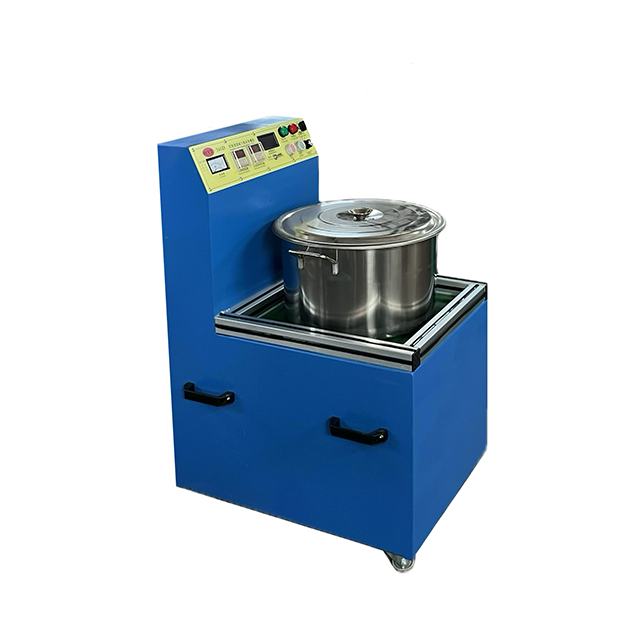
Electromagnetic finishing solves these problems through a completely different mechanical approach. The system positions a powerful rotating electromagnet beneath a processing tank. This magnetic field rapidly spins thousands of microscopic stainless steel pins. The moving magnetic field creates a fluid, high-speed brushing action. These tiny pins effortlessly flow through micro-crevices, cross-holes, and intricate channels. Because the pins gently brush the surface rather than gouging it, a magnetic polishing machine accesses hidden areas without altering strict dimensional tolerances.
This technological shift delivers a highly measurable return on investment. Operations immediately see drastically reduced scrap rates because the process eliminates part deformation. It replaces tedious hand-filing and manual buffing, freeing up skilled labor for higher-value tasks. You also gain highly predictable, repeatable cycle times. Standardized cycles mean your production schedule remains accurate, and quality control rejects drop significantly.
Adopting this technology brings specific, measurable advantages to a production floor. We can categorize these benefits into three primary areas.
Zero Dimensional Loss: The gentle brushing action of the stainless steel pins removes oxidation and micro-burrs without stripping base material. This characteristic maintains the extremely tight tolerances required for CNC-machined components and high-precision cast parts. You keep your exact specifications intact.
Simultaneous Multi-Surface Action: Conventional tools only touch exterior edges. The magnetic process pushes media completely through the component. It processes external surfaces, blind holes, and internal cavities concurrently. You achieve uniform smoothness everywhere at once.
Rapid Cycle Times: Efficiency drastically improves compared to standard tumbling. Most finishing cycles complete in 15 to 30 minutes. The exact duration depends on material hardness and the initial surface roughness. This rapid turnaround keeps production bottlenecks to an absolute minimum.
No single surface treatment handles every manufacturing scenario. You must understand the physical constraints of this process before altering your production lines.
Material Constraints: The process excels on non-ferrous metals like aluminum, brass, copper, and titanium. It also works beautifully on austenitic stainless steels (like 304 and 316). However, it is largely ineffective on highly magnetic ferrous metals. Magnetic parts will magnetize, attract the steel pins, and completely halt the fluid tumbling action.
No Heavy Burrs: This method cannot replace grinding machines. It will not remove thick slag, heavy machining lines, or massive burrs. You must utilize pre-processing methods for large burrs before running parts through the magnetic system.
Various manufacturing sectors rely on this technology to meet specific quality standards. Below are the most common industrial applications.
Medical Device Manufacturing
Surgical instruments and implantable devices require flawless surfaces. Bone screws, scalpel handles, and dental fixtures must meet stringent hygiene and smoothness standards. Traditional abrasives often leave microscopic residues embedded in the metal. The magnetic process avoids this entirely. It polishes intricate medical geometries without introducing any abrasive grit into the component.
Aerospace & Automotive Micro-Components
Internal flow dynamics dictate the performance of many aerospace and automotive parts. Fuel injection nozzles, pressure sensors, and electronic housings feature complex internal channels. Burrs inside these channels disrupt fluid flow and cause system failures. Magnetic finishing effortlessly accesses these internal zones. It removes micro-burrs and smooths internal pathways, ensuring precise fluid and gas dynamics.
Jewelry & Horology (Watchmaking)
The luxury goods sector demands high-luster finishes. Historically, artisans spent hours hand-polishing intricate rings, delicate chains, and microscopic watch gears. Metal polishing via magnetic force automates this exact process. The tiny pins reach between gem settings and inside watch gear teeth. Crucially, it achieves a mirror-like finish without removing expensive gold or silver weight.
Precision CNC Machining
High-volume machine shops constantly seek automation for final surface treatments. Swiss-turned parts often feature complex threads and tiny cross-holes. Operators use magnetic technology to automate the final finishing stage for these components. Fine parts finishing becomes highly repeatable. It allows CNC shops to deliver tight-tolerance, burr-free parts straight off the production line in massive batches.
Selecting the correct machine requires matching technical specifications to your daily production realities. Over-sizing wastes capital, while under-sizing creates immediate production bottlenecks.
Batch Capacity vs. Footprint
You must match the machine tank dimensions (measured in liters or gallons) to your component size and daily volume. Overloading a tank is a common mistake. Too many parts in a single batch cause part-on-part impingement, leading to dents and scratches. You must calculate your maximum batch size to ensure parts float freely within the media matrix.
Frequency and Speed Controls
Programmable controls separate basic machines from industrial assets. Variable frequency drives (VFD) allow operators to adjust the magnetic field rotation speed. You absolutely need VFDs if your facility handles multiple metal alloys. Aluminum requires a different rotational speed than tough titanium. Programmable timers ensure consistent cycle lengths across different operator shifts.
Media Selection (Stainless Steel Pins)
Pin diameter dictates the outcome of the finish. You must match the pin size to the smallest crevice on your part. If a hole is 0.5mm wide, you must use 0.3mm pins so they pass through freely.
Pin Diameter (mm) | Primary Application | Surface Finish Result |
|---|---|---|
0.2mm - 0.3mm | Ultra-fine crevices, jewelry, micro-gears | High luster, gentle cleaning |
0.4mm - 0.5mm | Standard CNC parts, small blind holes | Balanced polishing and micro-deburring |
0.7mm - 1.0mm+ | Larger castings, heavier surface conditioning | Matte to semi-bright, aggressive deburring |
Cooling Systems
You must evaluate continuous-run capabilities for high-volume shops. Lower-end models overheat quickly during multi-shift operations. The friction from the magnetic field generates significant heat. A reliable industrial magnetic tumbler features integrated cooling fans or liquid jackets. These cooling mechanisms protect the internal electromagnets and prevent the cleaning compound from boiling during extended runs.
Purchasing the equipment only solves half the equation. Successful adoption requires updating your shop floor workflows to handle the realities of wet polishing and microscopic media.
Media Separation Workflows
Many facilities fail to account for the hidden labor involved in separating micro-pins from finished parts. The stainless steel pins cling to parts via surface tension. Manually washing and picking pins out of blind holes wastes hours of labor. We strongly recommend investing in magnetic separators or automated sieves. These secondary systems quickly pull the media away from your components, streamlining high-volume setups.
Consumable Management
You must budget accurately for ongoing consumable replacements. While stainless steel pins last a long time, they eventually round off and lose their cutting edges. You will need to replace the media periodically. Furthermore, the process relies heavily on specific chemical compounds and liquid lubricants. These proprietary liquids prevent metal oxidation, cool the bath, and suspend removed dirt away from your clean parts.
Compliance & Wastewater
Wet tumbling generates industrial wastewater. You must address the environmental reality of disposing of used polishing compounds and suspended metal particulates. Dumping untreated fluid directly into municipal drains often violates local environmental regulations. You need to standardize your filtration processes. Implement settling tanks or centrifuge systems to filter out heavy metals before discharging the water.
The "Sample Test" Rule
Never purchase a machine based purely on theoretical specifications. We strongly advise following the sample test rule. Send a batch of your actual raw parts to the machine manufacturer. Request a proof-of-concept test. This hands-on validation verifies the required cycle times, determines the exact pin size needed, and confirms the final surface quality before you commit to capital expenditure.
A magnetic polishing system serves as a highly specialized, high-yield asset for fine parts finishing. It excels when you match it correctly to non-ferrous materials and specific micro-burr profiles. The technology removes manual labor bottlenecks, protects intricate part geometries, and guarantees repeatable surface quality. It transforms the way machine shops and jewelry makers handle precision components.
To move forward effectively, production managers should immediately audit their current manual finishing stations. Calculate the exact labor hours wasted on deburring small cross-holes or polishing blind cavities. Use these calculations to justify the investment. Finally, contact reputable vendors and request a structured sample test using your most challenging components. Seeing your own parts perfectly finished provides the ultimate proof of value.
A: It is generally not recommended for carbon steel or magnetic 400-series stainless steel, as the parts will magnetize, clump together, and disrupt the polishing action. It is ideal for 300-series stainless and non-ferrous metals.
A: Vibratory machines use heavy abrasive media and friction for edge rounding and heavier deburring. Magnetic tumblers use tiny steel pins driven by magnets to polish delicate parts and reach inside small holes without removing material.
A: With proper maintenance and use of the correct lubricating compounds, high-quality stainless steel pins can last for thousands of cycles. They only require replacement if they become bent, significantly shortened, or contaminated.
A: No. It is designed for surface burnishing, micro-deburring, and cleaning. Deep scratches require abrasive sanding, cutting media, or traditional metal polishing steps prior to the magnetic tumbler.