- Home
- Machine
- Media
- Application
- Service
- About Us
- Blogs
- Contact Us
- All
- Product Name
- Product Keyword
- Product Model
- Product Summary
- Product Description
- Multi Field Search


Views: 0 Author: Site Editor Publish Time: 2026-03-20 Origin: Site
In industries where precision is paramount, magnetic polishing machines are indispensable. These machines use magnetic fields to guide abrasives, ensuring a flawless finish without excessive pressure. As the demand for high-quality surface finishes grows, it's essential to understand the various types of magnetic polishing machines. In this article, we'll explore their differences and help you choose the right one for your production needs.
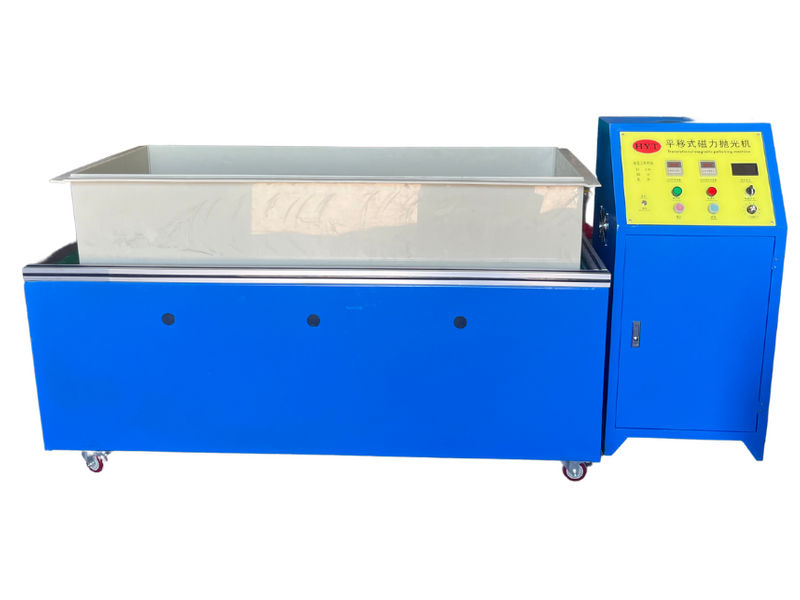
Magnetic polishing is a type of surface treatment that uses a magnetic field to control the motion of abrasive media. The magnetic field guides the abrasives, often stainless steel pins or ceramic beads, across the surface of a workpiece. The abrasives perform micro-cutting and polishing actions, removing burrs, oxidation, and any surface imperfections while improving the overall finish.
Unlike traditional mechanical polishing, which relies on direct contact between tools and workpieces, magnetic polishing is a “flexible” method that does not exert excessive pressure. The abrasives are gently guided along the surface, reducing the risk of scratching or warping delicate materials. The process is particularly effective for small, thin-walled, and intricately shaped parts, making it ideal for precision industries.
Magnetic polishing offers several advantages that set it apart from traditional polishing techniques:
● Superior Precision: Magnetic polishing ensures a uniform finish across the entire surface of the workpiece, regardless of its shape or complexity. The magnetic field’s controlled action leads to consistent, high-quality results.
● Minimal Deformation: Since magnetic polishing does not rely on excessive pressure, it reduces the chances of warping or deforming delicate components. This is particularly beneficial for thin-walled parts or materials that are prone to mechanical stress.
● Time and Cost Efficiency: Magnetic polishing is faster than many traditional methods, allowing for higher throughput and reduced production times. Moreover, the ability to reuse abrasive media reduces the cost of consumables, making it a cost-effective solution in the long run.
● Adaptability: Magnetic polishing is highly versatile and can handle parts with complex geometries or small dimensions. Its ability to polish intricate internal grooves, narrow holes, and other hard-to-reach areas makes it an indispensable tool in many industries.
Magnetic polishing machines are widely used across several industries where precision and surface quality are paramount:
● Aerospace: Components like turbine blades, engine parts, and structural elements require a smooth, defect-free surface to ensure their longevity and reliability. Magnetic polishing meets these stringent surface finish requirements.
● Medical Devices: In the medical field, instruments like surgical tools, implants, and diagnostic devices must be free of burrs or oxidation to ensure proper functionality and safety. Magnetic polishing helps achieve the required surface integrity.
● Semiconductors: Magnetic polishing is ideal for semiconductor parts, such as wafers and microchips, which require ultra-smooth surfaces to function correctly and integrate with other components.
Magnetic polishing machines come in various types, each designed for specific applications. Let’s take a deeper look at the different types and their uses.
Magnetic tumbler machines are one of the most common types of magnetic polishing machines. These machines use a rotating chamber filled with stainless steel pins, which are powered by a magnetic field. The pins rotate in multiple directions, causing the workpieces to tumble and collide with the abrasive media. This action results in polishing and smoothing of the surfaces.
● Jewelry Polishing: Magnetic tumblers are frequently used in jewelry manufacturing to polish rings, necklaces, and bracelets.
● Small Metal Parts: Ideal for polishing small, intricate metal components such as screws, bolts, and fasteners.
● Consistency: Magnetic tumblers offer repeatable, uniform results, ensuring that every part in the batch receives the same high-quality finish.
● High Efficiency: They can process multiple parts simultaneously, making them ideal for medium-to-large batch production.
Magnetic barrel polishing machines are designed to handle bulk polishing. These machines feature a rotating barrel that contains both the workpieces and abrasive media. As the barrel rotates, the parts move through the abrasive media, polishing them to the desired finish. This type of machine is well-suited for mass production environments.
● Mass Production: Often used in automotive and electronics manufacturing, where large quantities of small parts need polishing.
● Uniform Polishing: Ensures that each part, regardless of its shape or size, receives an even finish.
● High Volume: Barrel polishing machines can process large numbers of parts in a single batch, reducing the time and cost of polishing.
● Cost-Effectiveness: With minimal labor required, these machines are ideal for businesses looking to streamline their production processes.
Magnetic disc polishing machines use rotating discs to polish parts. These machines are typically used for more precision-based polishing, as the discs provide a highly controlled polishing environment. They are ideal for small, intricate parts that require a precise, uniform finish.
● Precision Components: Used for polishing gears, springs, and other small mechanical parts.
● Intricate Shapes: Ideal for delicate components with complex geometries.
● Precision: Magnetic disc machines offer highly precise control over the polishing process, making them suitable for high-accuracy applications.
● Flexibility: These machines can polish parts with intricate shapes and surfaces that would be challenging to process using other methods.
Tip: Adjust the speed and rotation of the disc to optimize the polishing process for specific materials and part geometries.
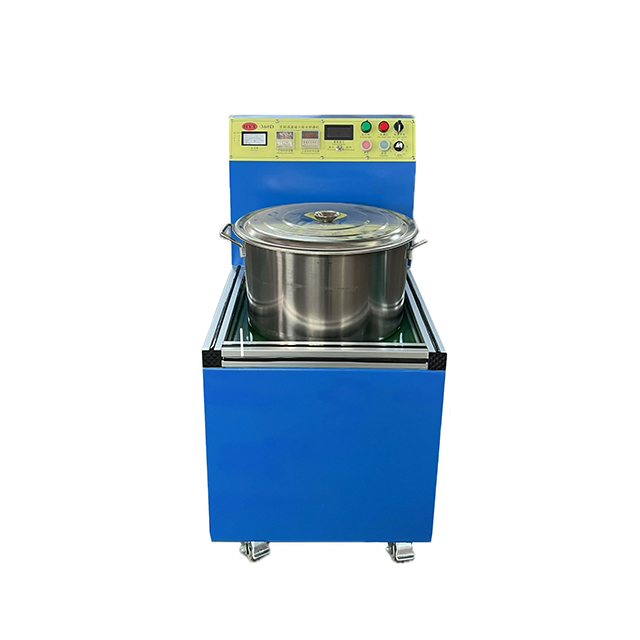
Robotic magnetic polishing systems integrate robotic arms with magnetic polishing tools to automate the polishing process. These systems are capable of polishing complex components with high precision. Robotic systems are often used for the most demanding polishing tasks, where precision and repeatability are critical.
● Aerospace: For polishing turbine blades and other high-precision components.
● Medical Devices: Ideal for polishing small medical implants or surgical tools.
● Automation: Robotic systems reduce the need for human intervention, ensuring high consistency and minimizing human error.
● Precision: Robotic arms can reach areas that traditional polishing methods may miss, ensuring complete coverage of the workpiece.
The choice of magnetic polishing machine depends on several factors, including production speed, part complexity, and cost considerations.
Each type of machine excels in different areas:
● Magnetic Tumblers: Best for efficient bulk polishing, especially in jewelry manufacturing or small parts production.
● Barrel Polishing Machines: Suitable for high-volume production with a focus on uniform results.
● Magnetic Disc Polishing Machines: Ideal for precision polishing of intricate parts or components that require detailed finishes.
● Robotic Systems: Offer the highest precision for complex geometries and are ideal for highly detailed and delicate components.
The cost and maintenance of these machines vary:
● Magnetic Tumblers: Affordable and low-maintenance, making them ideal for small to medium-sized businesses.
● Barrel Polishing Machines: More expensive but suitable for large-scale production, offering a good balance between cost and performance.
● Disc Polishing Machines: Higher initial investment, but they provide unmatched precision for small-batch and high-accuracy applications.
● Robotic Systems: The most expensive and requiring more maintenance, robotic systems are suitable for high-precision and high-complexity applications.
Magnetic polishing machines are adaptable to various industries:
● Aerospace: Disc and robotic systems are ideal for complex components that require high precision.
● Medical Devices: Robotic systems and disc polishing machines ensure the safety and functionality of medical implants and surgical tools.
● Automotive: Barrel polishing machines are effective for polishing bulk parts like gears, fasteners, and springs.
Machine Type | Best for | Advantages |
Magnetic Tumbler | Jewelry and small parts | High efficiency, consistent results |
Barrel Polishing | High-volume production | Cost-effective, uniform finish |
Magnetic Disc | Precision components | High precision, ideal for intricate parts |
Robotic Systems | Complex and delicate components | Automation, high precision |
Many modern magnetic polishing machines come with programmable controls that allow operators to set precise parameters for polishing. These machines can adjust speed, pressure, and motion direction based on the material and workpiece specifications. Automation improves productivity by reducing manual intervention and ensuring consistent results across production batches.
Magnetic polishing is more environmentally friendly compared to traditional polishing methods, such as chemical polishing. It eliminates the need for harsh chemicals and solvents, reducing waste and making it a safer option for both the environment and workers. Additionally, these machines produce less noise and dust, contributing to a cleaner and safer workplace.
Magnetic polishing machines are vital for achieving precise finishes across various industries. Whether polishing delicate components or mass-producing parts, there’s a suitable machine for every need. Understanding the differences between machines helps manufacturers make informed choices to improve efficiency. For high precision and consistency, investing in magnetic polishing technology is a smart long-term decision. Huzhou Norden Machinery Factory provides high-quality machines designed to deliver exceptional results, enhancing production efficiency and product value.
A: A Magnetic Polishing Machine uses magnetic fields to guide abrasive media, providing precise and uniform polishing on a workpiece's surface.
A: Magnetic Polishing Machines use a magnetic field to control abrasives, which polish the workpiece with minimal mechanical pressure, enhancing surface quality.
A: Magnetic Polishing Machines offer higher precision, less deformation, and are ideal for complex geometries and delicate components.
A: There are several types, including magnetic tumblers, barrel polishing machines, disc polishing machines, and robotic polishing systems, each suited for specific applications.
A: Industries like aerospace, medical devices, and semiconductor manufacturing benefit from Magnetic Polishing Machines for precise, high-quality surface finishes.


