- Home
- Machine
- Media
- Application
- Service
- About Us
- Blogs
- Contact Us
- All
- Product Name
- Product Keyword
- Product Model
- Product Summary
- Product Description
- Multi Field Search


Views: 0 Author: Site Editor Publish Time: 2026-06-19 Origin: Site
Manual surface finishing remains a persistent manufacturing challenge across many modern production floors. Hand grinding and buffing are incredibly slow. They require intensive manual labor and often produce inconsistent part tolerances. To solve these bottlenecks, the vibratory polishing machine has emerged as the industry standard for automating batch processing. These robust systems replace tedious handwork with precision-engineered motion. They ensure every single component meets exact specifications without fail.
Understanding the core mechanics of these machines is the very first step toward improving your operations. You must grasp how they function to effectively reduce your cycle times. This knowledge helps you standardize quality control across large batches. Ultimately, it allows you to select the exact equipment configuration tailored for your specific production line.
Core Function: Vibratory polishing machines utilize mechanical resonance to create a cutting or burnishing action between media and parts.
Primary Applications: Ideal for high-volume metal deburring, radiusing, and isotropic surface finishing without altering part geometry.
Business Value: Replaces manual labor with scalable, repeatable processing, significantly lowering per-part finishing costs.
Selection Variable: Success relies entirely on matching machine geometry (bowl vs. tub), frequency settings, and media type to the specific substrate and part design.
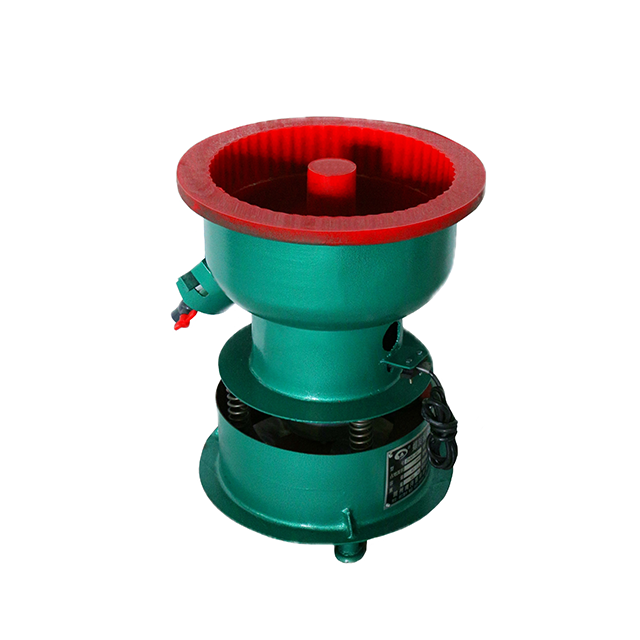
At its core, we define this equipment as a specialized mass finishing system. It uses a vigorously vibrating vessel to create controlled friction between workpieces and abrasive media. Unlike basic rotary tumblers, these engineered systems rely on complex mechanical components working in harmony. Every part of a modern polishing machine plays a critical role in delivering consistent results.
To understand the equipment fully, we must examine its core components. Here are the primary structural elements you will find in industrial units:
The Process Chamber: This is the primary work zone. It is typically a heavy-duty bowl or rectangular tub. Manufacturers line these chambers using thick, wear-resistant polyurethane. The durable lining withstands continuous internal abrasion. It also protects delicate parts from striking bare steel walls.
Drive System: A heavy-duty electric motor powers the entire operation. It connects to an eccentric weight system. By adjusting these weights, operators generate specific three-dimensional vibrational patterns. This mechanism dictates how aggressively the contents move.
Suspension: Massive coil springs support the process chamber. These heavy-duty springs isolate the intense vibration. They prevent destructive energy from transferring to your factory floor. Instead, they direct all kinetic energy inward toward the media and parts.
Compound and Fluid System: Dry finishing is rare in industrial settings. Most units include integrated dosing systems. They pump precise mixtures of water and chemical compounds into the chamber. This fluid flushes away microscopic debris. It also prevents rust and enhances the final polish.
The magic of this process lies entirely in its unique physical motion. Vibratory finishing does not simply shake parts aimlessly. It utilizes precision mechanics to achieve uniform surface improvement.
Inside the chamber, the load experiences a distinct three-dimensional "corkscrew" action. We call this toroidal motion. The media and parts continuously roll down the outer wall of the bowl. They then sweep across the bottom and climb up the inner hub. This fluid, rolling action ensures parts and media move together in unison. They scrub against each other continuously. Unlike traditional tumble barrels, the components never crash or drop violently into one another.
You control the aggressiveness of the cut by adjusting two variables. These are amplitude and frequency. Amplitude refers to the size of the vibrational wave. A higher amplitude creates a more aggressive, bouncing cutting action. Frequency refers to the speed of the motor. Adjusting these settings determines whether you perform heavy grinding or gentle burnishing. High-frequency settings generally yield a smoother, more refined polish.
The machine itself only supplies kinetic energy. The abrasive media actually performs the physical work. You choose media shapes and materials based on your specific goals. Ceramic triangles handle aggressive cutting. High-density plastic media provides gentle smoothing for soft aluminums. Steel media excels at heavy burnishing. The media surrounds the parts, applying uniform pressure to every exposed surface.
The mechanical flow allows for highly efficient part handling. In continuous processing setups, parts feed into one end and emerge finished at the other. In batch processing, the corkscrew motion helps operators separate the load. A mechanical flap drops down at the end of the cycle. It guides the contents over a screening deck. The media falls through the screen back into the bowl. The finished parts travel seamlessly to the next production stage.
Adopting automated mass finishing systems completely transforms a production floor. Manufacturers face intense pressure to deliver flawless components faster. Traditional methods simply cannot keep pace with modern volume demands.
The shift from manual grinding to automated batch processing offers massive benefits. You immediately eliminate the need for skilled technicians to stand at grinding wheels. Instead, one operator can manage multiple vibratory bowls simultaneously. They simply load the raw parts and start the cycle. This allows you to reallocate valuable labor to more critical tasks, like CNC machining or quality assurance. Mid-to-high volume facilities typically observe a rapid return on investment. The transition dramatically lowers your per-part finishing costs.
Manual finishing inherently introduces human error. Fatigue causes technicians to apply uneven pressure. This leads to rejected parts and wasted material. Vibratory mechanics completely eliminate this variable. Every single item in a 5,000-piece batch receives identical friction. They experience the exact same pressure for the exact same duration. You achieve total uniformity across the entire production run.
Aggressive belt sanding often ruins fragile features. It can easily flatten critical radii or distort dimensions. Vibratory finishing operates much more gently. The media encapsulates the entire workpiece. It flows smoothly through blind holes and carefully scrubs delicate threads. The process improves the surface without altering the fundamental geometry of your components.
Finishing Method | Labor Requirement | Consistency Level | Geometry Protection |
|---|---|---|---|
Manual Grinding/Buffing | Intensive (1-to-1 ratio) | Low (Prone to human fatigue) | Poor (Risk of over-grinding) |
Automated Vibratory Finishing | Minimal (1 operator to multiple machines) | Exceptional (Identical cycle parameters) | Excellent (Media encapsulates parts) |
Selecting the correct system determines your ultimate success. You cannot simply purchase a generic unit and expect perfect results. You must evaluate your specific parts and match them to the right machine configuration.
The physical shape of the process chamber matters immensely. Round bowls remain the most popular choice for general production. They are ideal for continuous processing and automated separation. We heavily recommend round bowls for standard metal deburring on small to medium parts.
Rectangular tubs serve a completely different purpose. You need a tub configuration for long, awkwardly shaped, or exceptionally heavy parts. Aerospace spars, automotive camshafts, and architectural extrusions fit perfectly inside rectangular tubs. A round bowl would cause these long parts to bind or damage one another.
Proper sizing prevents processing bottlenecks. You must account for the strict media-to-part ratio. A common rule of thumb dictates a 3:1 or 4:1 ratio by volume. This means you need three parts media for every one part workpiece. This dense cushion prevents parts from striking each other. If you need to process 50 liters of parts per hour, your machine must hold at least 200 liters of total volume. Always calculate this ratio before determining your required machine capacity.
Modern facilities rarely process just one type of metal. You might deburr heavy steel brackets on Monday. By Wednesday, you might polish delicate aluminum housings. This is why a Variable Frequency Drive (VFD) is completely non-negotiable. A VFD allows operators to fine-tune the motor speed instantly. You can shift from aggressive, high-amplitude grinding to a gentle, low-amplitude polish with the turn of a dial. Without a VFD, you remain locked into a single processing speed.
Integrating these systems requires realistic planning. You must look beyond the initial installation. Daily operations involve consumables, waste management, and environmental compliance. Ignoring these factors leads to sudden operational disruptions.
We must maintain transparency regarding operational realities. Abrasive media wears down over time. It is a consumable product. As ceramic and plastic media aggressively rub against metal, they slowly degrade. You must factor this media attrition into your daily running costs. Furthermore, operators must perform routine clean-outs. Undersized, worn-out media can easily lodge inside the blind holes of your parts. You must regularly screen and replenish your media supply to maintain optimal cutting action.
Environmental compliance demands serious attention. The wet finishing process generates a specific type of wastewater called effluent. This murky sludge contains microscopic metal fines. It also carries degraded media particles and residual chemical compounds. You cannot simply dump this effluent down a standard factory drain. Facilities must implement proper filtration systems. Centrifuges or chemical flocculation systems separate the solids from the liquid. You must dispose of the remaining sludge according to local environmental regulations.
Industrial mechanical resonance is inherently loud. The continuous friction of stones against metal generates significant noise. Unmitigated, a large unit easily exceeds standard factory safety limits. Addressing this noise is a mandatory implementation consideration. You must protect your workforce and comply with OSHA standards. Fortunately, many manufacturers offer custom acoustic covers. Integrating heavy-duty soundproofing ensures your surface finishing operations remain safe and compliant without disrupting nearby workers.
A modern vibratory processing system is far more than a simple tumbler. It represents a highly tunable, automated solution designed to scale your production quality. By embracing these systems, manufacturers eliminate the inconsistencies of manual labor. You gain precise control over your exact finishing parameters.
When selecting your equipment, keep these core principles in mind:
Always calculate your required volume using a strict 3:1 or 4:1 media-to-part ratio.
Choose rectangular tubs for long parts and round bowls for standard batch processing.
Ensure your chosen system includes a Variable Frequency Drive for maximum flexibility.
Plan your wastewater and acoustic management strategies before installation.
We advise buyers to prioritize vendors who offer comprehensive "sample processing." Demand proof of concept testing before you finalize any purchase. Sending your raw parts to a vendor allows them to validate the exact media type, compound, and machine settings required for success. We encourage you to consult with a specialized application engineer today. They will evaluate your specific part geometries and throughput requirements to design the perfect finishing solution.
A: "Tumbler" is often used colloquially for hobbyist equipment or rotary barrels. Industrial vibratory polishing machines use precision toroidal motion, variable frequency drives, and automated separation. This results in faster and safer finishing without violent part-on-part impingement.
A: Yes, but it requires precise engineering. By increasing the media-to-part ratio, using high-density or low-abrasion media like plastic or porcelain, and lowering the amplitude, delicate parts can be processed safely without distortion.
A: Cycle times are highly variable based on starting conditions and desired outcomes. Heavy metal deburring may take 1 to 4 hours. Fine polishing can take up to 24 hours depending on the compound and media used. Trial processing establishes exact cycle times.